
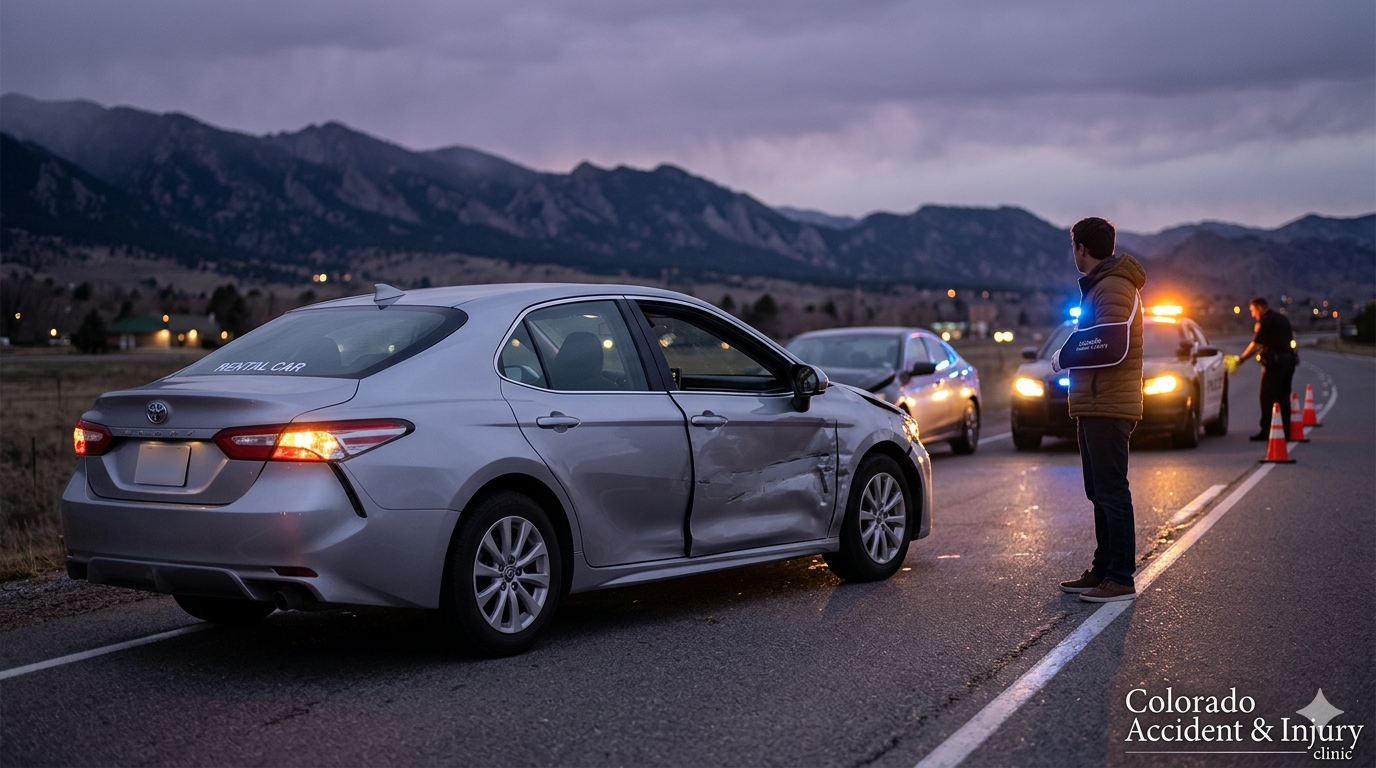
Injured in an Accident While Driving a Rental Car: Navigating the Complex Path to Recovery
If you are injured in an accident while driving a rental car, the situation is significantly more complex than a standard collision in your own vehicle. You aren’t just dealing with two drivers and two insurance companies; you are now navigating a triangle of liability involving the rental agency, your personal insurance provider, and potentially a third-party credit card issuer. This layered complexity can lead to a “blame game” where each entity tries to deflect the cost of your medical care.
At Colorado Accident & Injury, we specialize in the medical and administrative coordination required when accidents don’t follow the “standard” script. Our goal is to ensure that while the insurance companies argue over who pays for the car, your body is getting the expert care it needs to heal properly.
1. The Immediate Priority: Your Physical Well-Being
The moment the impact occurs, your body undergoes massive physical stress. Rental cars are often different sizes and have different safety ratings than the vehicle you drive daily, which can change how your body absorbs the force of an impact. If you are injured in an accident while driving a rental car, seek a professional medical evaluation immediately.
Even a “minor” fender bender can result in whiplash or soft tissue damage that remains hidden for several days. By visiting our clinic for an initial screening, you establish a medical baseline. We utilize Chiropractic Care to assess spinal integrity and ensure that the adrenaline of the moment isn’t masking a serious underlying injury.
2. The Legal Necessity of a Police Report
In a rental car situation, a police report is non-negotiable. Rental agencies usually require a formal accident report to initiate their internal claims process. When the authorities arrive, provide a factual account of the incident. This report serves as an objective record that protects you if the rental company tries to charge you for pre-existing damage or if the other driver contests their liability.
3. Untangling the Insurance Web
One of the most confusing aspects of being injured in an accident while driving a rental car is determining which policy is “primary.”
- Personal Auto Insurance: Most personal policies extend to rentals, but coverage limits may vary.
- Rental Company Coverage: If you purchased the Collision Damage Waiver (CDW) or Personal Accident Insurance (PAI) at the counter, this usually acts as your first line of defense.
- Credit Card Benefits: Many premium credit cards offer secondary rental insurance, but these rarely cover medical expenses—they focus primarily on vehicle damage.
Because our clinic helps patients navigate financial and legal challenges, we help you organize your medical records so they can be submitted to the correct primary payer, preventing billing delays.
4. Notifying the Rental Agency Without Admitting Fault
You must notify the rental company as soon as possible. However, be cautious. Rental agencies are focused on the “loss of use” of their asset. When you speak to them, stick strictly to the facts: the time, the location, and the police report number. Avoid making subjective statements about your physical condition until you have been fully evaluated by our Best Physical Therapy Services team.
5. Documenting Everything: The Renter’s Burden
When you aren’t in your own car, you don’t have the luxury of “checking the glovebox” later. You must document the scene immediately:
- Rental Agreement: Keep a digital copy of your signed rental contract.
- The Damage: Take wide and close-up photos of the rental car and the other involved vehicles.
- Medical Expenses: Keep a meticulous log of all treatments, from your initial ER visit to your ongoing Pain Management sessions.
6. The Danger of “Hidden” Rental Injuries
Rental cars often have different seat configurations and headrest heights than what your body is accustomed to. This lack of “ergonomic familiarity” can actually make you more susceptible to neck and back strain during a crash. If you feel any stiffness or “brain fog,” these are clinical indicators of trauma. Our therapists focus on functional restoration, ensuring that the specific way your body was impacted in that specific rental car is addressed through personalized care.
7. Why You Need a Specialized Attorney
Navigating a rental car claim often requires legal muscle. An attorney can help determine if the rental car itself had a mechanical failure—such as worn brakes or faulty tires—that contributed to the accident. While they investigate the rental agency’s maintenance records, our medical team focuses on your physical rehabilitation. This ensures your legal case is backed by strong, objective medical evidence.
8. Following Through on the Recovery Roadmap
Insurance adjusters in rental car cases are notoriously aggressive. They may argue that because you were “on vacation” or “traveling for work,” your injuries are exaggerated. By attending every scheduled session of Best Physical Therapy Services and following our clinical recommendations, you provide undeniable proof of your commitment to recovery.
9. Protecting Your Future Rights
In Colorado, you have the right to pursue compensation regardless of the vehicle’s ownership. However, rental car contracts often contain “mandatory arbitration” clauses or specific venue requirements. Knowing your rights as both a driver and a consumer is essential to ensuring you aren’t bullied by a large rental corporation.
Get the Expert Care You Need to Move Forward Don’t let the complexity of a rental car accident stall your recovery. Our integrated team is here to provide the medical excellence and administrative support you need to get back on the road.