Accident and Injury? Know about Disc Herniation and Protrusions
Disc herniation and protrusions are often referred to by many names—bulging discs, slipped discs, or ruptured discs—but they all describe a specific type of damage or degeneration of the intervertebral discs. If you suffer from chronic back pain following a collision, you may be wondering exactly what is causing your discomfort.
At Colorado Accident & Injury, our integrated team helps patients navigate financial and legal challenges by providing accurate diagnoses and comprehensive care for spinal trauma. Understanding accident and injury? know about disc herniation and protrusions is the first step toward a lasting solution to your pain.
Understanding the Intervertebral Disc
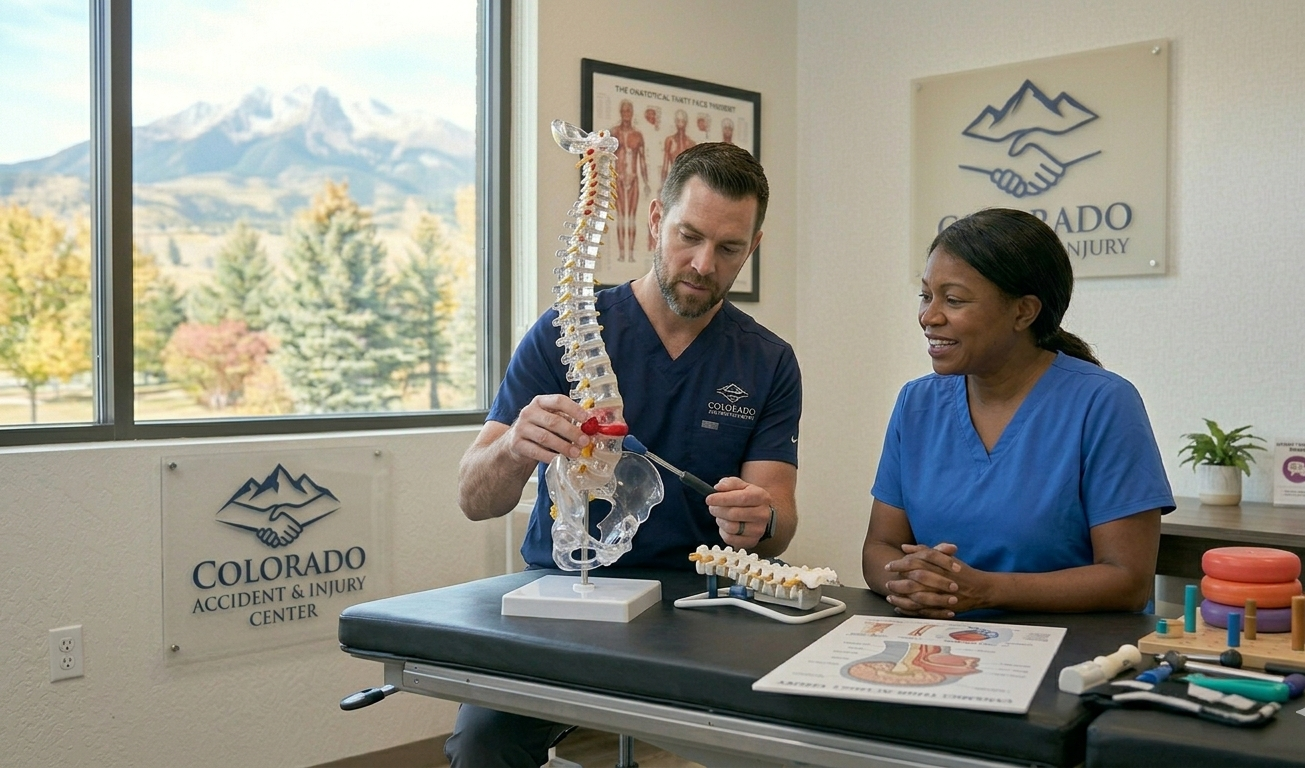
To understand a disc injury, one must first understand the anatomy of the spine. The intervertebral disc is a shock-absorbing cushion that sits between your vertebrae. It comprises two primary parts:
- Nucleus Pulposus: A gel-like inner substance that acts as a cushion.
- Annulus Fibrosus: A tough, outer ring that helps to keep the disc in place.
These discs are essential to your spinal health, absorbing shock and protecting your vertebrae while allowing your spine to move freely and flexibly. Unfortunately, when these discs are damaged due to injury or disease, it can lead to pain, stiffness, and severe nerve damage.
Disc Herniation vs. Protrusion: What is the Difference?
Disc herniation or protrusion occurs when the outer layer of the disc is compromised, often putting pressure on nearby nerves.
- Bulging Disc (Protrusion): This occurs when the outer layer of the disc swells or bulges outward, but there is no tear in the outer layer. This can happen naturally with age as discs dehydrate.
- Herniated Disc: This is a more severe condition where there is a tear in the outer layer and the inner gel leaks out. This is frequently caused by acute injury, such as a car accident, or lifting heavy objects.
Recognizing the Symptoms
Disc issues most commonly occur in the lower back (lumbar spine) but can also affect the neck (cervical spine).
- Neck Region: A protruding disc in the neck can irritate nerves, causing pain that extends into the arms, muscle weakness in the hand or shoulder, and a loss of sensation.
- Back Region: In the lower back, this often leads to sciatica, where pain radiates down the leg. In the mid-back (thoracic spine), while less common, it can lead to spinal cord compression and numbness.
Common Causes of Disc Damage
While aging and degenerative disc disease are major factors, several other elements contribute to disc failure:
- Accident Injuries and Trauma: High-impact collisions can rupture vertebrae and damage the discs instantly.
- Poor Posture: Long periods of sitting or improper exercise techniques can cause discs to degenerate prematurely.
- Obesity: Carrying excess body weight puts a constant, debilitating strain on the intervertebral discs.
Integrated Treatment at Colorado Accident & Injury
For most patients, the first step is conservative treatment. Within a few weeks, a combination of Best Physical Therapy Services, bed rest, and pain medication can lead to significant improvement. However, if symptoms persist, more intensive treatments like Chiropractic Care, microdiscectomy, or disc fusion surgery may be necessary.
Our clinic specializes in helping accident and injury victims who desire a lasting solution to their pain. By integrating physical therapy with advanced pain management, we ensure your recovery is both fast and comprehensive.
Final Thoughts: Moving Toward a Pain-Free Life
A spinal injury does not have to be a permanent sentence of chronic pain. By understanding accident and injury? know about disc herniation and protrusions, you can make informed decisions about your health. Visit our experts today for the best physical therapy and consultation in Colorado Springs.
Reclaim Your Mobility Don’t let a herniated disc stop you from living your life. Our team at Colorado Accident & Injury Center provides the targeted care you need to heal. Contact us today to start your recovery journey.