
What to Do When a Medical Condition Leads to a Car Accident: A Guide to Liability and Healing
What to do when a medical condition leads to a car accident is a question that sits at the difficult intersection of healthcare and personal injury law. These incidents, often referred to as “Sudden Medical Emergencies,” are uniquely terrifying because they strip the driver of control without warning. Whether you suffered a heart attack, a sudden seizure, or a diabetic blackout, the aftermath involves more than just vehicle repairs—it involves proving the medical cause and protecting your future.
At Colorado Accident & Injury, our multi-disciplinary team helps patients navigate financial and legal challenges by providing the objective medical data needed to explain exactly what happened physically during the crash.
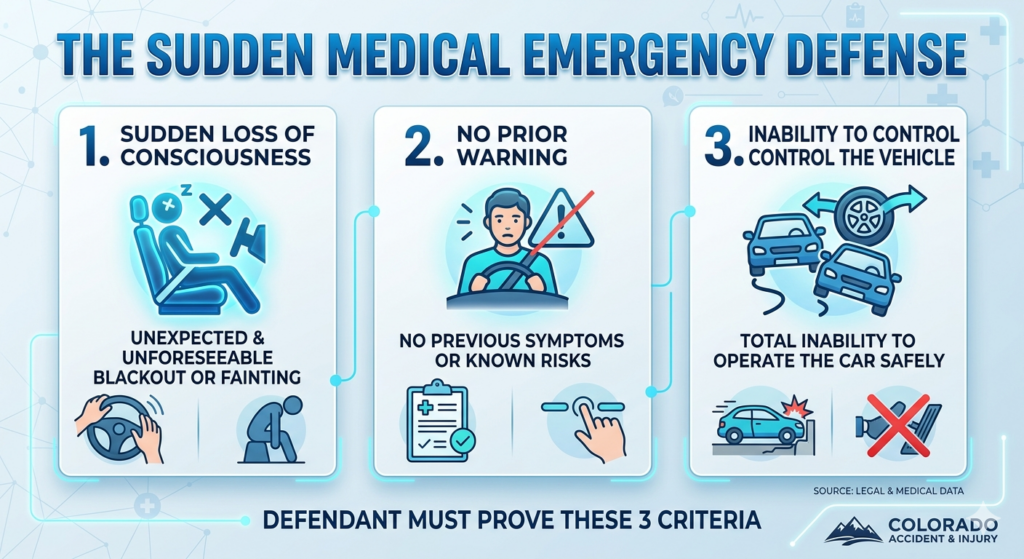
1. Understanding the “Sudden Medical Emergency” Defense
In Colorado, the law recognizes that a driver who loses consciousness due to an unforeseeable medical event may not be held liable for the resulting accident. However, the burden of proof is high.
- Foreseeability: If you had a history of untreated seizures and chose to drive, the defense likely won’t apply.
- Suddenness: The event must have occurred so quickly that the driver had no time to safely pull over.
2. Immediate Post-Accident Steps
If you are physically able, the steps you take in the minutes following the crash are vital for your safety and your potential legal case.
- Call 911 Immediately: You need a combined response from police and paramedics. The medical records from the scene are the “Patient Zero” evidence for your medical emergency claim.
- State the Facts: Tell the officers and EMTs exactly what you felt before losing control—such as chest pain, tunnel vision, or dizziness.
3. The Necessity of Immediate Diagnostic Imaging
Your health is the priority, but diagnostic proof is the legal currency of your case. After being stabilized, it is essential to seek an evaluation for any injuries caused by the impact itself.
- Structural Integrity: Even if a heart attack caused the crash, the impact likely caused musculoskeletal trauma. Seeking Chiropractic Care immediately can identify whiplash or spinal misalignments that occurred during the collision.
- Recovery Pathways: If the accident resulted in neurological or mobility issues, our Best Physical Therapy Services can help you rebuild the functional strength needed to eventually return to driving.
4. Managing the Insurance Complexity
Filing a claim when a medical condition is involved is rarely straightforward. Insurance companies often look for any reason to deny a claim, and they may argue that your condition was “pre-existing” and therefore your fault for being on the road.
- Documentation is Key: You will need a comprehensive medical report that connects the specific health event to the loss of vehicle control.
- The Review Process: Be prepared for your insurance company to request your full medical history to check for prior warnings of your condition.
5. Impact on Your Driving Privileges
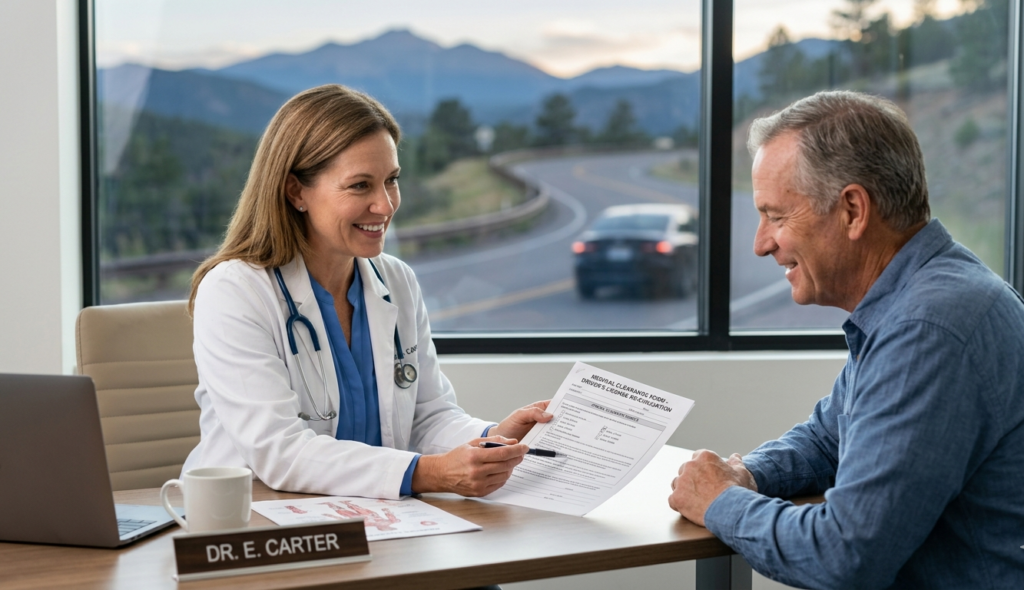
In Colorado, a medical-related accident can trigger a re-evaluation of your driver’s license.
- Medical Fitness: You may be required to have a doctor sign off on your ability to drive safely.
- The Waiting Period: For conditions like seizures, there is often a mandatory “seizure-free” period (typically six months) before you can legally drive again.
6. The Emotional and Psychological Toll
Losing control of your body while behind the wheel is a traumatic experience that can lead to significant driving anxiety or PTSD.
- Holistic Support: Addressing the physical pain through Massage Therapy can help lower cortisol levels and manage the muscle tension associated with accident-related stress.
- Professional Counseling: We recommend seeking trauma-informed therapy to help you process the fear of the event and rebuild your confidence.
7. Preventive Measures and Future Safety
What to do when a medical condition leads to a car accident also includes looking forward to ensure it doesn’t happen again.
- Medication Management: Strictly adhering to prescriptions for blood pressure, diabetes, or epilepsy is your first line of defense.
- Listen to Your Body: If you feel “off,” dizzy, or unusually fatigued, do not get behind the wheel.
- Regular Screenings: Ongoing check-ups can identify cardiovascular or neurological risks before they become a crisis on the highway.
8. Why Colorado Accident & Injury is Your Best Ally
Navigating the aftermath of a medical-related crash requires a team that understands both the courtroom and the clinic. We provide the integrated care—from specialized physical rehabilitation to precise medical narratives—that your attorney needs to prove you were the victim of a sudden emergency rather than a negligent driver.
You Don’t Have to Face This Alone A medical crisis is overwhelming, but the aftermath of an accident shouldn’t be. At Colorado Accident & Injury, we are here to support your physical healing and provide the clinical evidence you need to clear your name and move forward.