Concussion Symptoms: Recognizing the Signs of “Invisible” Brain Trauma
Concussions are a remarkably common injury associated with vehicle accidents. Despite their frequency, they are often misunderstood because they are “invisible” injuries—they don’t involve broken bones or bleeding that shows up on a standard X-ray. Instead, a concussion is a traumatic brain injury (TBI) that impairs how your brain functions, leading to distressing physical and mental symptoms that can vary in duration. Understanding Concussion Symptoms is critical to determining when you need to see a specialist to prevent long-term damage.
At Colorado Accident & Injury, our multidisciplinary team helps patients navigate financial and legal challenges while providing the specialized neurological oversight required to manage recovery safely.
What Exactly is a Concussion?
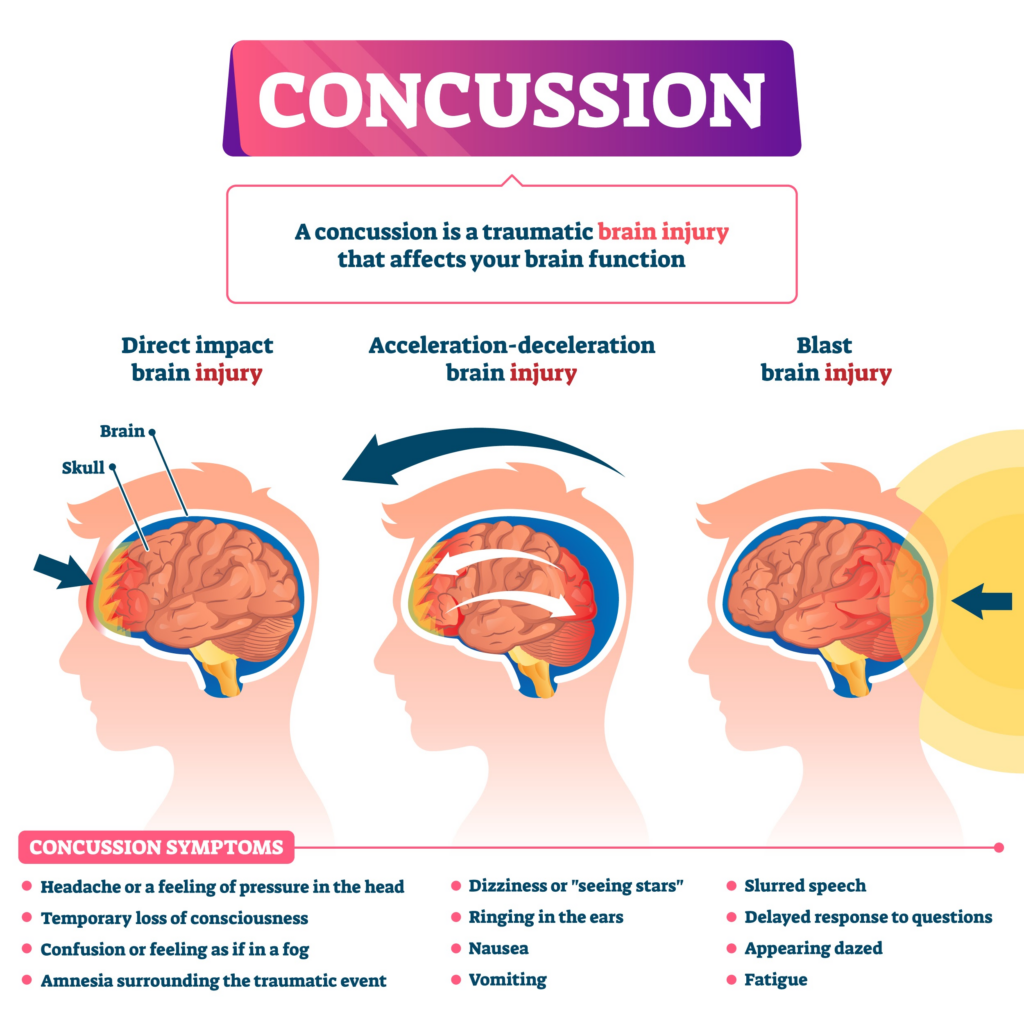
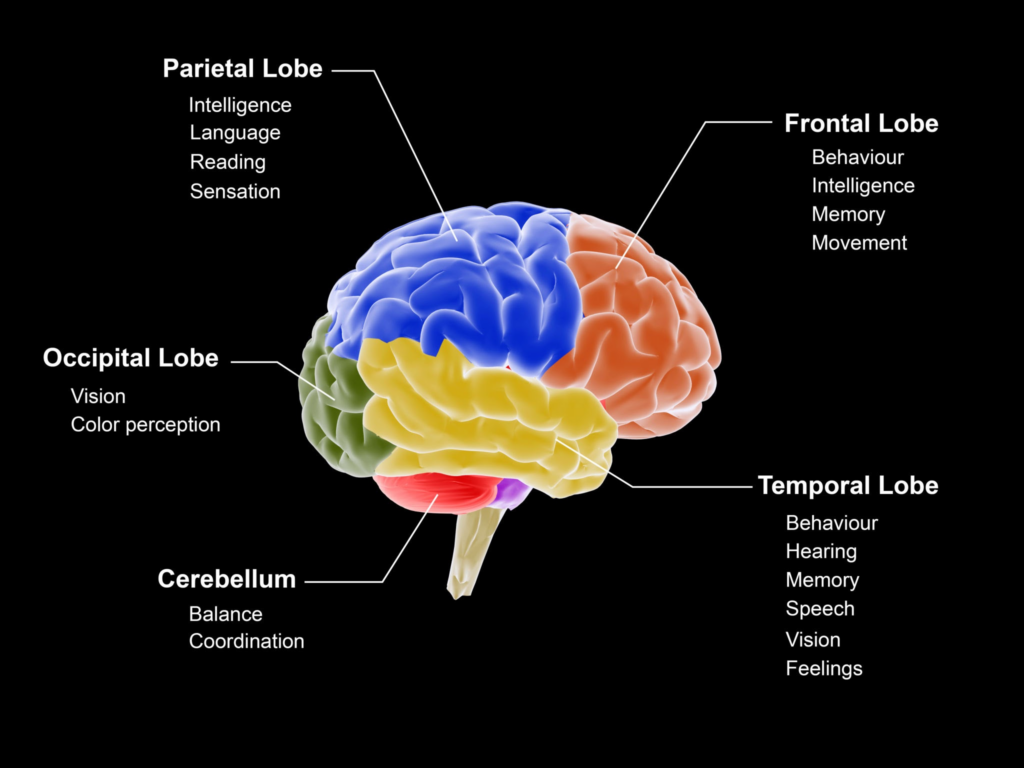
A concussion disrupts the brain’s normal function, specifically affecting cognition, balance, and coordination.
- Mechanism of Injury: While a strong blow to the head is the most frequent cause, a concussion can also result from “whiplash” force—the violent or spontaneous shaking of the head and neck.
- The Impact: During an accident, this motion causes the brain to jolt or collide with the interior of the skull.
- The Myth of Unconsciousness: While a concussion can cause a victim to fall unconscious, this is actually not common. Most survivors remain awake but suffer from a metabolic crisis within the brain tissue.
Identifying Physical Concussion Symptoms
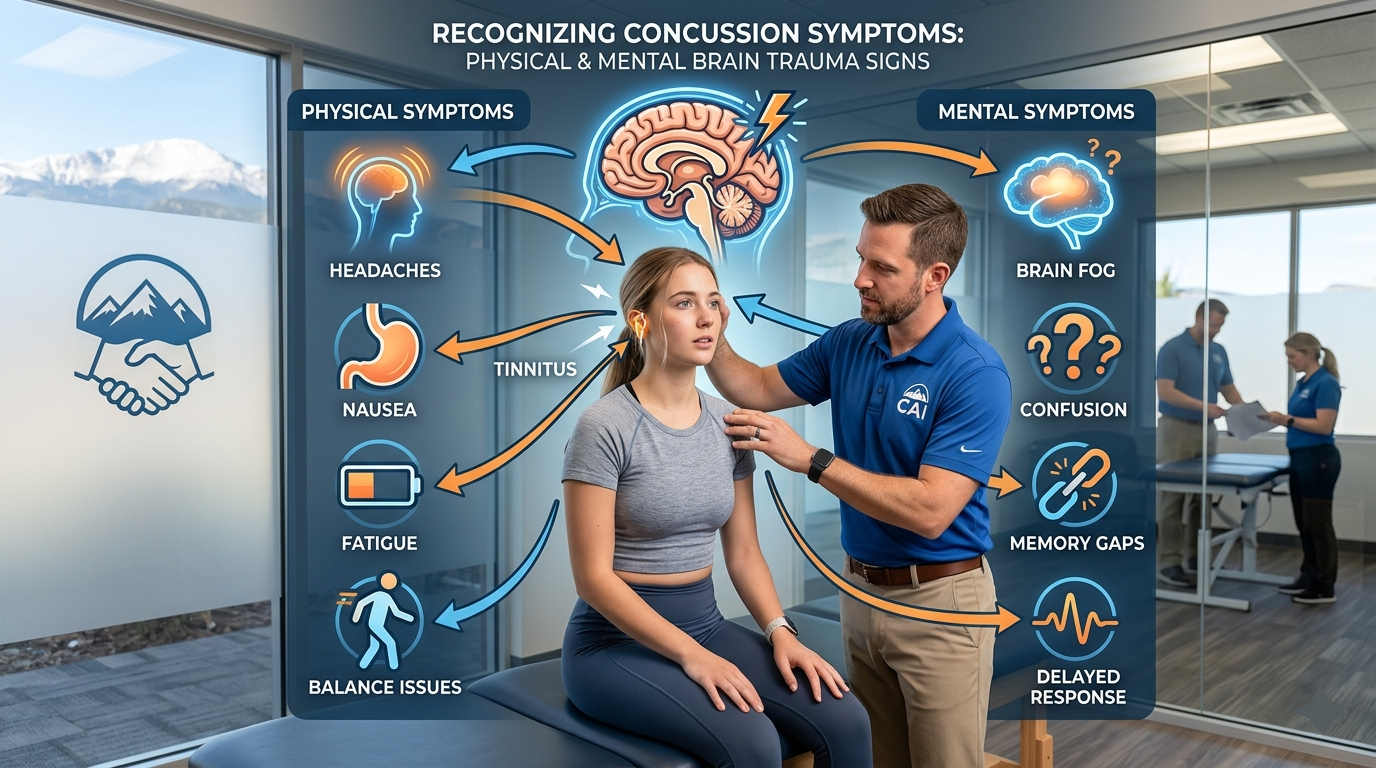
Physical signs are often the first indicators that something is wrong. Some emerge instantly, while others, like light sensitivity, may take days to appear.
- Immediate Pain: Frequent headaches, migraines, and “seeing stars”.
- Sensory Disruption: Ringing in the ears (tinnitus), blurred vision, or changes in taste and smell.
- Systemic Distress: Nausea, vomiting, fatigue, lethargy, and extreme drowsiness.
- Balance Issues: Feeling dizzy or experiencing a loss of physical coordination.
Recognizing Mental and Cognitive Signs
Cognitive symptoms can be even more distressing than physical ones, as they affect your personality and ability to process information.
- Cognitive Fog: Confusion, brain fog, and a delayed response when answering simple questions.
- Memory Gaps: Amnesia regarding the accident itself or repeating the same sentence multiple times.
- Emotional Regulation: Irritability, sudden mood swings, or psychological struggles like new-onset anxiety and depression.
- Sleep Disturbance: Significant changes in sleep habits, ranging from insomnia to oversleeping.
The Path to Recovery and Prevention
The majority of people who experience Concussion Symptoms recover fully, but the speed and success of that recovery depend on early intervention.
- Seek Professional Assessment: If you experience any symptoms following a traumatic injury, contact a specialist immediately to assess the condition and prevent permanent damage.
- Safety First: The best management is prevention. Always ensure your seatbelt is buckled and practice strict vehicle safety.
- Physical Resilience: Regular exercise helps strengthen the muscles of the neck and core, providing better stabilization during a sudden impact.
Comprehensive Care for Brain Health
Recovery from a TBI often requires a multi-angled approach. At our center, we integrate Medical Pain Management for migraine control with Best Physical Therapy Services to address balance and coordination. If the injury involved neck trauma, our Chiropractic Care team ensures the spine is aligned to support neurological healing.
Protect Your Brain, Restore Your Life
Our Colorado Springs experts specialize in the delicate science of concussion recovery.