
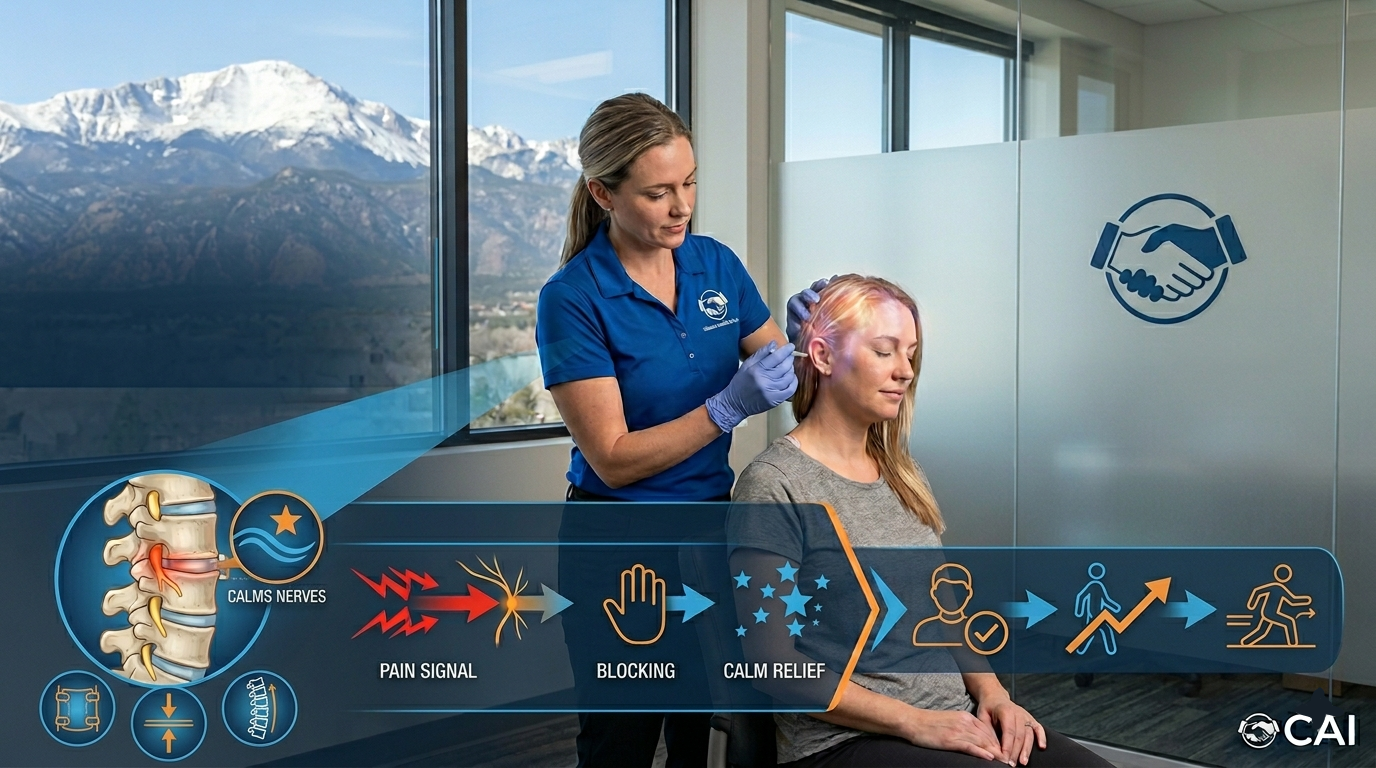
Interventional Pain Management: A Targeted Approach to Chronic Headaches
Chronic headaches and migraines following a vehicle accident are more than just a nuisance; they are often a sign of underlying neurological or musculoskeletal distress. While standard medical treatment often relies on oral medications to dull the pain, these “top-down” approaches frequently fail to address the root cause. This is where Interventional Pain Management offers a superior alternative. By intercepting pain signals between their origin and the brain, specialists can provide long-term relief that surgery or pills cannot match.
At Colorado Accident & Injury, our team helps patients navigate financial and legal challenges while utilizing advanced Medical Pain Management techniques to stop chronic headaches at the source.
What is Interventional Pain Management?
This branch of medicine focuses on “intercepting” the transmission of nerve signals. Unlike surgery, which involves removing or replacing damaged tissue, interventional procedures focus on the communication highway of the body. By blocking the signal before it reaches its destination, we can effectively “turn off” the pain associated with post-accident trauma.
The Limitations of Oral Medication
While common, oral medications often act as a temporary mask. They circulate throughout the entire body, which can lead to systemic side effects and does not directly target the specific nerve or joint causing the headache. Interventional medicine doctors prefer techniques like nerve blocks and steroid injections because they provide a “bottom-up” solution, treating the root cause on a long-term basis.
Key Techniques for Managing Headaches
Interventional medicine is versatile. It can treat headaches caused by physical trauma, secondary side effects of other injuries, or even “rebound” headaches caused by medication. Here are the primary methods used today:
1. Peripheral Nerve Blocks
This is a gold-standard treatment for migraines and chronic headaches. It is particularly effective for sensitive patients, such as seniors, who may have adverse reactions to strong drugs. Research has shown that a vast majority of patients—up to 73% in specific studies—experience significant improvement in headache frequency and intensity when using nerve blocks.
2. Decompression of the Occipital Nerve
Many post-accident headaches stem from the neck. When vertebrae are compressed during an impact, they can pinch the nerves traveling to the head. This results in sharp, frequent migraines known as occipital neuralgia.
- Initial Approach: Doctors may start by splinting or stabilizing the area to reduce mechanical strain.
- Advanced Intervention: If manual stabilization fails, nerve injections are used to minimize inflammation and physically reduce the compression on the nerve root. This is often paired with Chiropractic Care to ensure the vertebrae are properly aligned.
3. Magnesium and Steroid Injections
For many clinics, magnesium injections serve as an introductory interventional tool.
- Magnesium: Highly effective for migraines and cluster headaches, especially when combined with anti-nausea medications.
- Steroids: Used to provide powerful, localized anti-inflammatory effects. While steroids are less common for general tension headaches, they are a potent weapon against persistent, chronic migraines that resist other forms of Medical Pain Management.
Integrating Your Recovery
At our Colorado Springs facility, we don’t just stop the pain; we help you heal. By using Interventional Pain Management to lower your “pain floor,” we make it possible for you to engage with Best Physical Therapy Services. Strengthening the neck and upper back muscles is the best way to prevent headaches from returning once the nerve blocks wear off.
Final Thoughts: Reclaim Your Focus
Chronic headaches shouldn’t be the “new normal” after a car accident. Whether your pain is caused by nerve compression, inflammation, or neurological hypersensitivity, there is a targeted, minimally invasive procedure that can help.
Stop the Signal, Start the Healing
Our Colorado Springs specialists are experts in interventional headache relief.