
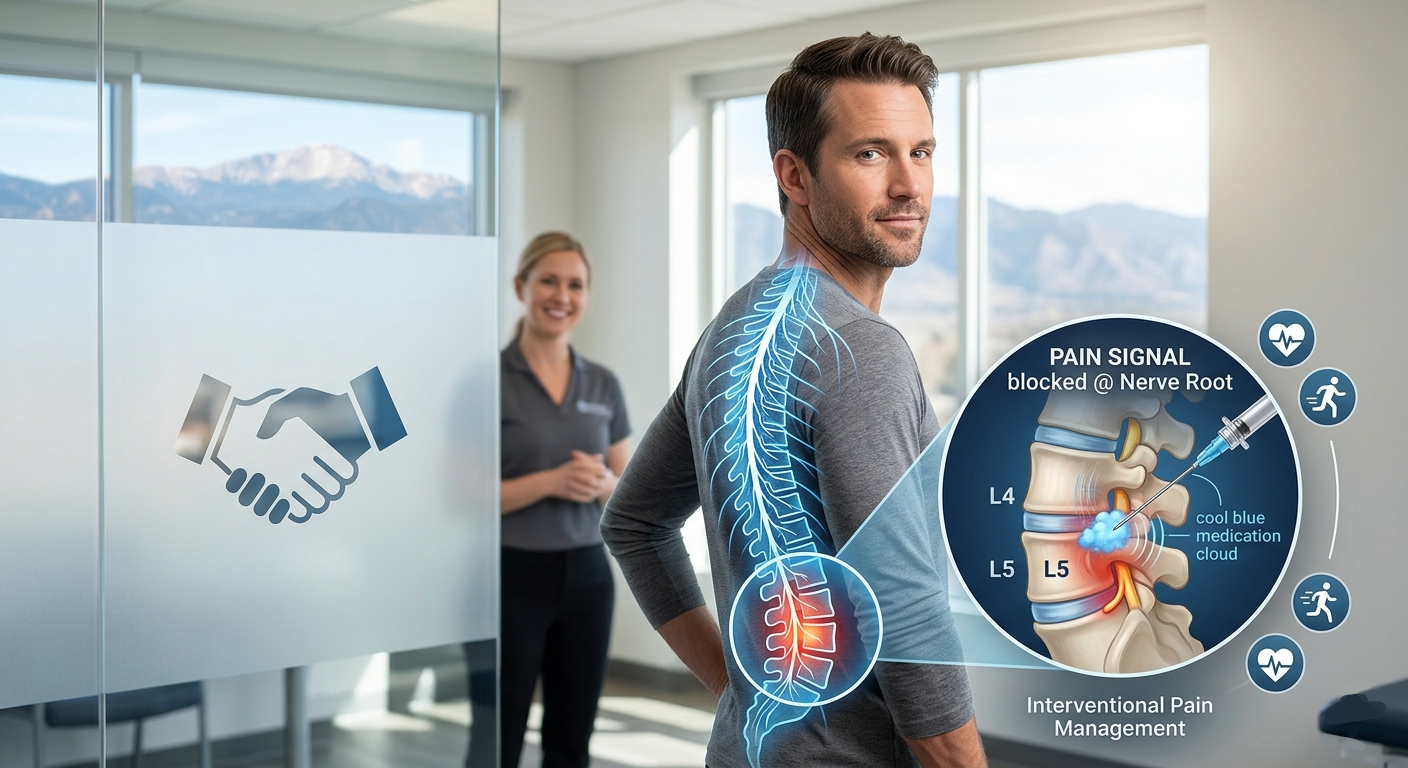
Interventional Pain Management for Accident Victims: Rewiring the Recovery Process
Pain is far more than a physical sensation; it is an intrusive force that can have far-reaching effects on our emotional, physical, and intellectual well-being. Whether it is chronic or acute, pain that persists for weeks, months, or even years can lead to severe complications, including sleep disorders, decreased mental alertness, social anxiety, and depression. For those who have survived a collision, interventional pain management for accident victims offers a specialized path to reclaiming a life free from these debilitating side effects.
At Colorado Accident & Injury, our expert team helps patients navigate financial and legal challenges while utilizing state-of-the-art techniques to ensure that extreme pain does not slow down your body’s natural healing process.
The Science of “Pain-Free” Healing
Lacerations, broken bones, and soft-tissue traumas are inherently painful. However, scientific research has demonstrated that extreme pain actually acts as a physiological barrier, slowing down the healing process. By addressing pain at its neurological source, we facilitate a faster recovery.
Interventional pain management for accident victims involves using sophisticated medical techniques to “block” or “cloud” the transmission of pain signals to the brain. This allows survivors to perform their daily activities and engage in rehabilitative therapies without the constant shadow of physical distress.
Primary Interventional Techniques
The specific technique utilized for a patient depends entirely on the site of the injury and the intensity of the pain. The most common procedures include:
1. Nerve Blocks
When a body part is injured, it sends a distress signal through the nerves to the brain. The brain then processes this signal, and you perceive the sensation of pain. A nerve block acts as a “firewall,” stopping these signals before they ever reach the brain.
- Temporary Blocks: Medication is injected at the site of trauma to provide relief for hours or days.
- Diagnostic Value: These blocks help doctors confirm exactly which nerve is responsible for the pain, guiding more permanent solutions.
2. Precision Injections
Targeted injections—including facet joints, spinal injections, trigger point injections, and steroids—provide direct relief to the source of trauma. These are designed to reduce the inflammation that causes debilitating medical conditions and “reset” the affected area.
3. Electrostimulation (Neuromodulation)
This advanced technique uses a small, imperceptible electrical current to modulate nerve activity. By sending specific electrical charges through the spine, we can effectively “scramble” the pain signals, preventing the brain from perceiving extreme levels of pain.
Why Interventional Care is a Game-Changer
Interventional care is often the missing link between initial trauma and full recovery. By integrating these procedures with Chiropractic Care and the Best Physical Therapy Services, we create a comprehensive environment for healing. When pain is managed through interventional techniques, patients are often able to:
- Reduce Dependency: Lower the need for high-dose or addictive oral pain medications.
- Increase Mobility: Engage in physical therapy exercises that would otherwise be too painful to perform.
- Improve Mental Health: Reduce the anxiety and depression often associated with chronic, “unsolvable” pain.
Final Thoughts: Pain Is Not Your New Normal
If you have been in an accident and find that extreme pain is stopping you from doing the things you love, remember that pain is not a “normal” part of the process that you must simply endure. Interventional pain management for accident victims provides the medical tools necessary to overcome the pain and get back on your feet faster.
Interrupt the Pain, Start the Healing Our Colorado Springs pain management doctors specialize in safe, effective interventional procedures.