
Deep Tissue Massage for Musculoskeletal Issues: Healing Beyond the Surface
When a body experiences the sudden, violent jolt of an automobile accident or a significant fall, the impact penetrates far beyond the skin’s surface. While external bruises often heal within weeks, the trauma frequently creates “adhesions”—painful knots of connective tissue—deep within the muscle layers. Left untreated, these internal scars cause chronic inflammation, restrict blood flow, and result in the persistent stiffness and sharp pains that victims feel months or even years after the initial event. Using deep tissue massage for musculoskeletal issues is a specialized clinical approach designed to dismantle these barriers and restore the body’s natural fluid motion.
At Colorado Accident & Injury, our multidisciplinary team helps patients navigate financial and legal challenges while providing the holistic care needed to ensure that deep-seated trauma does not become a lifelong burden.
Understanding the Mechanics of Deep Tissue Therapy
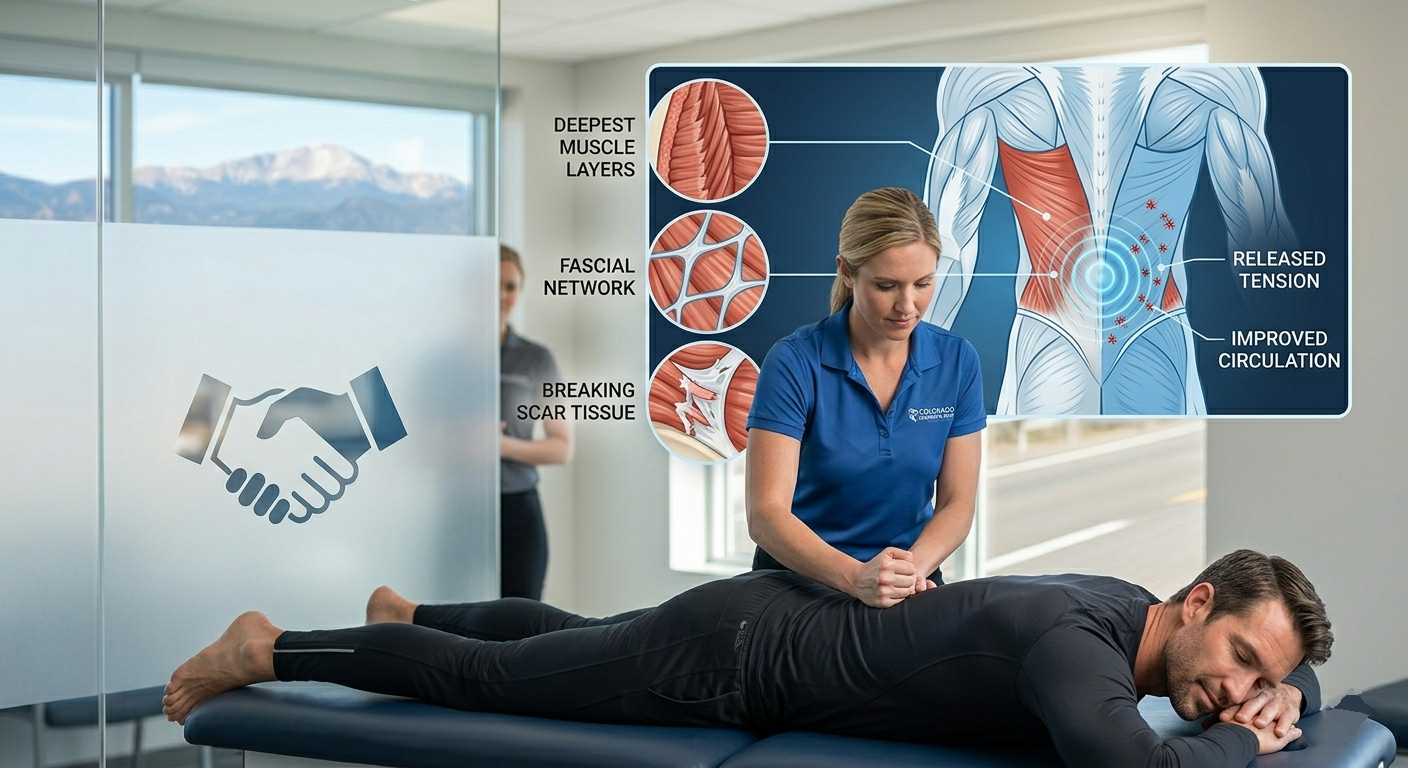
Unlike traditional relaxation massages, a deep tissue session is a targeted medical intervention. It focuses on the deepest layers of muscle tissue, tendons, and the “fascia”—the protective sheath surrounding your muscles.
The Process of Breaking Adhesions
The primary goal of this therapy is to break up scar tissue and physically physically break down muscle “knots” or adhesions that disrupt circulation. By using slow, deliberate strokes and intense pressure, a therapist can reach the sub-layer of musculature that standard massage cannot touch. This pressure encourages the realignment of muscle fibers and flushes out the inflammatory proteins trapped within the tissue.
Who Benefits from Deep Tissue Work?
While frequently utilized for car accident recovery, this therapy is essential for anyone experiencing high levels of physical strain:
- Accident Survivors: Addressing the specific “hidden” injuries in the neck, back, and shoulders.
- Athletes: Runners, gymnasts, and high-impact athletes who work their muscles more intensely than the average person.
- Chronic Pain Sufferers: Those dealing with conditions like fibromyalgia, tennis elbow, or chronic postural tension.
Safety and Contraindications
Because deep tissue massage for musculoskeletal issues involves significant firm pressure, it is not suitable for everyone.
- Blood Clot Risks: Individuals susceptible to blood clots must avoid this treatment, as the pressure could dislodge a clot into the bloodstream.
- Bone Density Issues: Those with osteoporosis or conditions that weaken the skeletal structure should opt for lighter therapies to avoid injury.
The Therapeutic Journey: What to Expect
A clinical session typically lasts between 60 and 90 minutes. The therapist begins with lighter strokes to “warm up” the superficial tissue before transitioning into deeper, slower strokes using fingers, fists, or even elbows for maximum impact. This concentrated tension is applied only to the affected areas, allowing for a deep release of stored physical stress.
To achieve lasting results, experts often recommend one to two sessions per week until the chronic symptoms begin to subside and mobility is fully restored.
A Holistic Framework for Recovery
Deep tissue work is most effective when it is part of a larger recovery ecosystem. At our clinic, we integrate this therapy with Chiropractic Care to ensure that once the muscles are loosened, the skeletal system can be properly aligned. This is further supported by the Best Physical Therapy Services to rebuild strength and Medical Pain Management to address the neurological aspects of injury.
Final Thoughts: Reclaim Your Mobility
Pain deep in your neck, back, or limbs is your body’s way of signaling that something is caught beneath the surface. By choosing deep tissue massage for musculoskeletal issues, you are taking a proactive step toward melting away the tension and saying goodbye to pain for good.
Healing That Goes Deeper Our Colorado Springs therapists specialize in rehabilitating the complex musculoskeletal issues that follow an accident.