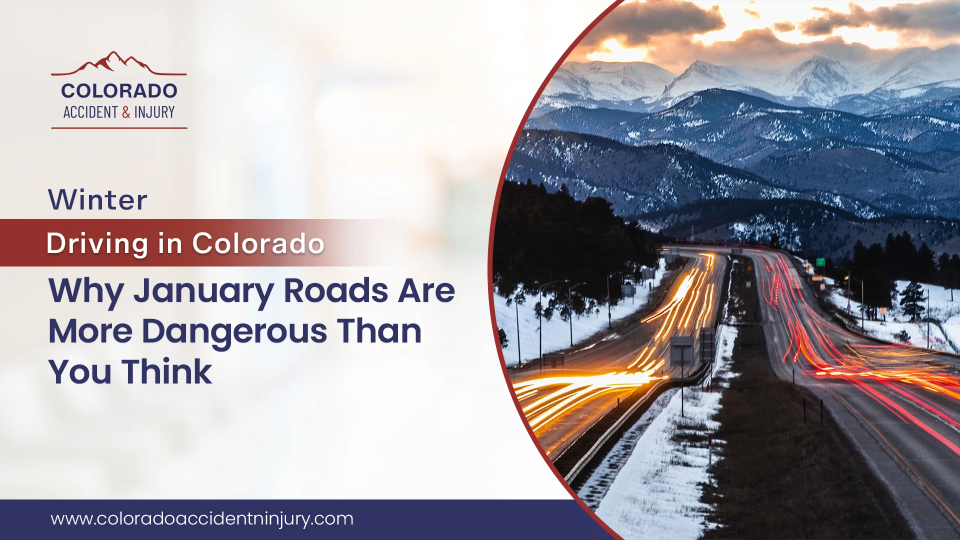
Winter Driving in Colorado: Why January Roads Are More Dangerous Than You Think
In Colorado, we take pride in our ability to handle snow. However, January often proves to be the most treacherous month for even the most seasoned drivers. Between the “deep freeze” temperatures and the heavy accumulation of holiday-season snow, the risk of Colorado winter driving accidents reaches a peak during this time of year.
At Colorado Accident & Injury, we see a significant increase in patients during the winter months. While some accidents are major, many are “minor” fender-benders on icy roads that result in lasting physical trauma. Understanding the unique dangers of January roads—and knowing what to do if you’re involved in a slide—is essential for every Colorado resident.
The “January Freeze”: Hidden Hazards
While a fresh layer of snow is easy to see, January brings several invisible dangers that contribute to frequent collisions:
1. The Peril of Black Ice
As temperatures fluctuate, melting snow during the day refreezes into a thin, transparent layer of ice at night. Black ice is nearly impossible to spot at 45 mph, leading to sudden loss of control. These “spin-out” accidents often result in jarring impacts that cause whiplash and spinal misalignment.
2. Reduced Visibility and “Sun Soreness”
In January, the sun sits lower in the sky. When that light hits a snow-covered landscape, the resulting glare can be blinding. Combined with blowing snow or fog, drivers often have mere seconds to react to braking vehicles in front of them.
3. Potholes and Road Debris
The freeze-thaw cycle in Colorado creates massive potholes by mid-winter. Swerving to avoid a pothole—or hitting one at high speed—can cause sudden jolts to the neck and back, similar to the force experienced in a low-speed collision.
Why “Minor” Winter Slips Cause Major Injuries
Many people involved in Colorado winter driving accidents walk away thinking they are fine because their car only has a scratched bumper. However, “low-impact” slides often involve sudden, lateral forces that the human body isn’t designed to absorb.
- The Bracing Effect: When you see an icy patch and grip the steering wheel tightly, your muscles tense up. This “bracing” can actually worsen muscle tears and ligament strain during the impact.
- Delayed Inflammation: Cold weather can actually numb immediate pain. You might not realize you have a soft tissue injury until you “thaw out” the next day and find you cannot turn your head.
How We Support Your Recovery
If you find yourself a victim of Colorado’s winter roads, recovery involves more than just rest. At our Colorado Springs clinic, we provide an integrated approach to help you get back on your feet:
- Chiropractic Care: We realign the spine to relieve pressure on nerves caused by the jarring force of a slip or slide.
- Physical Therapy: Our physical therapy programs focus on restoring the range of motion that is often lost after a winter whiplash injury.
- Massage Therapy: We target the deep muscle spasms that occur when your body tenses up during a winter whiteout.
Staying Safe on the Road
To minimize your risk this January:
- Check Your Tread: Colorado’s Traction Law is in effect for a reason. Ensure your tires are winter-rated.
- Increase Following Distance: On icy roads, you need triple the usual space to stop safely.
- Listen to Your Body: If you do slide into a curb or another car, don’t ignore the “minor” ache in your shoulder or neck.