Types of Physical Therapy Treatments: Tailored Modalities for Post-Crash Rehabilitation
You have likely heard that physical therapy is a highly effective tool to help you recover and obtain lasting pain relief after a motor vehicle collision. Indeed, targeted physical rehabilitation is vital to help accident victims improve their daily mobility, reduce localized inflammation, and achieve a full recovery.
However, many accident survivors are unaware that a wide variety of specialized physical therapy treatments are available, each designed to target specific types of musculoskeletal trauma depending on the exact nature and severity of the injury.
At Colorado Accident & Injury, our multi-disciplinary medical team helps patients navigate financial and legal challenges while providing advanced Medical Pain Management options. Our physical medicine specialists do not rely on generic, one-size-fits-all routines. Instead, we pull from an extensive toolkit of evidence-based active and passive modalities to build a customized rehabilitation protocol that matches your unique physiological needs.
Common Modalities in Post-Accident Physical Therapy
Depending on whether you are dealing with acute soft-tissue tearing, severe joint restrictions, or delayed whiplash symptoms, our therapists will integrate several specialized treatment techniques into your care plan:
1. Passive and Thermal Modalities for Early Relief
In the immediate aftermath of a high-velocity impact, your body is often too inflamed and painful for intensive exercise. During this acute phase, therapists deploy targeted passive modalities to soothe irritated nerves and prepare your muscles for movement:
- Cold/Ice Therapy: Crucial during the initial stages of injury to rapidly constrict blood vessels, which directly reduces acute pain, numbs nerve endings, and controls deep tissue swelling.
- Heat Therapy: Applied once the initial swelling has stabilized to enhance deep muscle relaxation, decrease stiffness, and significantly improve local blood circulation to accelerate tissue repair.
- Ultrasound Therapy: Utilizes high-frequency sound waves to penetrate deep into damaged soft tissues, generating mild thermal energy that helps relax severe muscle spasms, break down early scar tissue, and increase cellular healing.
- Electrical Stimulation (E-Stim): Delivers gentle, controlled electrical impulses through the skin to temporarily block pain signals from reaching the brain while reducing muscle atrophy and promoting fluid drainage in localized areas of the body.
2. Active and Manual Interventions for Long-Term Mobility
As your initial inflammation subsides, your treatment plan transitions toward rebuilding your physical framework and restoring your baseline strength:
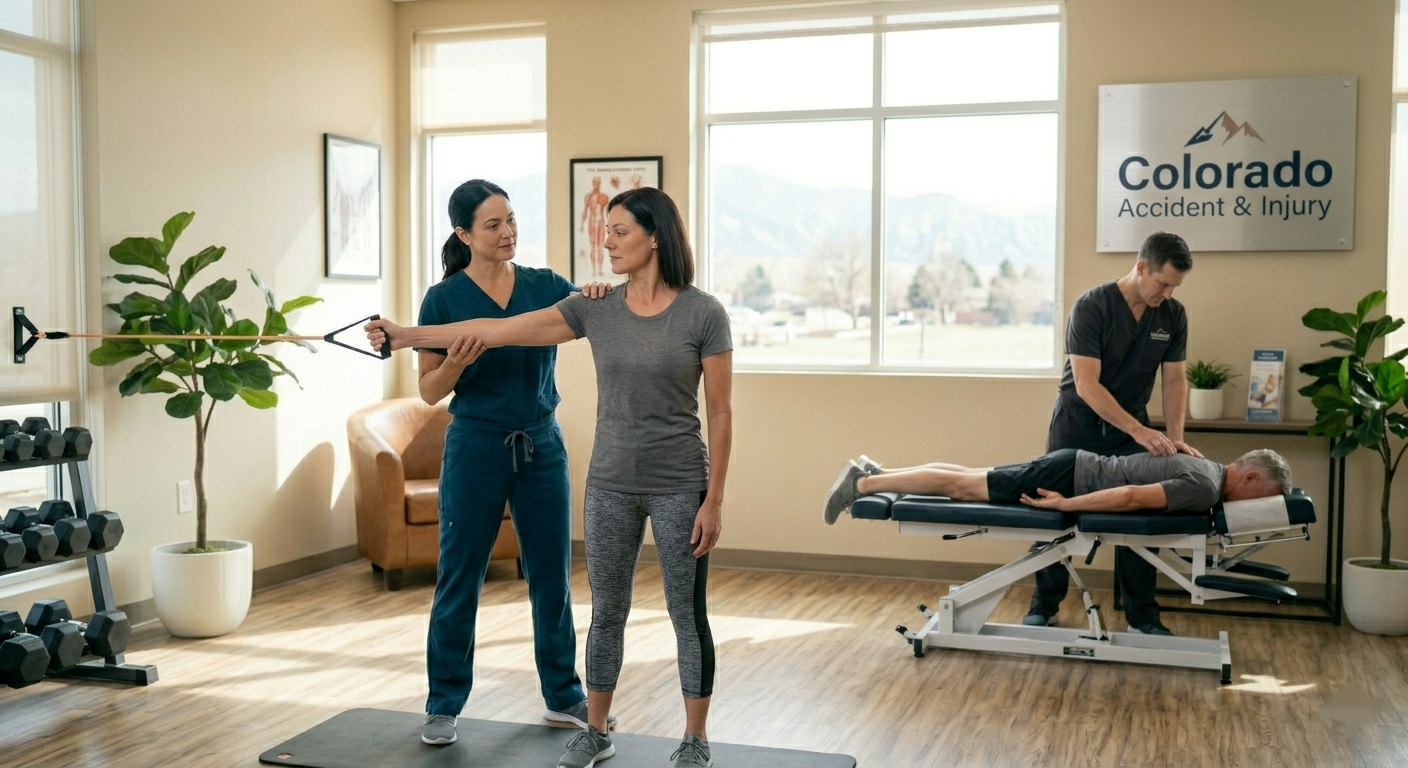
- Manual Therapy: Hands-on clinical techniques such as therapeutic massage, myofascial release, or the precise manipulation of joints and bones. This targeted pressure breaks up deep structural restrictions and restores smooth joint mechanics.
- Therapeutic Exercise: Highly structured, individualized movement routines designed specifically to strengthen weakened muscle groups, improve flexibility, and enhance your overall ability to perform essential daily functions without pain.
- Hydrotherapy: Utilizing the unique physical properties of water to facilitate low-impact rehabilitation. Performing targeted exercises in water or using aquatic resistance allows you to rebuild strength and mobility with substantially less gravity-induced stress on your spine and weight-bearing joints.
The Active, Passive, and Educational Phases of Physical Therapy
| Treatment Modality Type | Clinical Interventions | Primary Physiological Target |
| Passive & Thermal Care | Ice, Heat, Ultrasound, Electrical Stimulation | Minimizes acute pain, reduces tissue swelling, and relaxes severe muscle spasms. |
| Active & Manual Care | Manual Therapy, Therapeutic Exercise, Hydrotherapy | Realigns restricted joints, strengthens weak support muscles, and restores mobility. |
| Patient Education | Ergonomic Guidance, Home Exercise Programs | Empowers long-term joint protection and prevents future re-injury. |
3. Patient Education: Empowering Long-Term Wellness
A fundamental component of comprehensive physical rehabilitation is patient education. Working directly with a licensed physical therapist allows accident victims to learn highly specific ways to properly strengthen or stretch their bodies based on their exact injury profile.
Your therapist will provide extensive guidance on how to safely perform daily household or workplace tasks, protect vulnerable joints from unnecessary strain, and execute a customized home exercise program. Throughout your recovery journey, your clinician closely monitors your form to ensure you are continuing to exercise with flawless biomechanical technique, helping you recover exponentially faster and completely avoid re-injury.
A Unified, Multi-Discipline Approach to Whole-Body Recovery
Overcoming the complex trauma of a car crash requires a synchronized approach to physical medicine. Our Colorado Springs healthcare facility brings a fourteen-member team of specialists together under one address to ensure your treatments operate in perfect harmony:
- Best Physical Therapy Services: Vital for actively charting your post-crash functional range-of-motion metrics, flushing out delayed tissue swelling, and deploying targeted active conditioning to stabilize joints that are overcompensating for an injury.
- Expert Chiropractic Care: Works hand-in-hand with physical rehabilitation. While chiropractic adjustments safely realign misaligned vertebrae to remove mechanical pressure from compressed nerve roots, physical therapy strengthens the supporting musculature to hold that proper alignment permanently in place.
Protecting Your Personal Injury Claim with Forensic Records
For accident survivors, completing a structured physical therapy regimen is just as vital for your legal protection as it is for your physical rehabilitation. Personal injury lawyers and insurance adjusters evaluate post-crash medical charts with immense scrutiny.
If your medical records show that you skipped therapy sessions or stopped attending as soon as your initial pain began to fade, opposing insurance companies will routinely argue that your injuries were fully resolved or exaggerated. They use this perceived gap in care as a major administrative excuse to lower your personal injury settlement.
Our specialized medical team meticulously logs your precise range-of-motion gains, therapeutic milestones, and functional improvements from day one. This provides your legal counsel with the ironclad forensic evidence needed to push your insurance claims smoothly through complex administrative hurdles.
Conclusion
Determining which physical therapy treatments are right for your recovery requires expert diagnostic insight and a dedicated, unified care team. Do not let hidden soft-tissue tearing or joint stiffness permanently limit your active lifestyle. If you are involved in a collision, always prioritize calling 911 or emergency services first to guarantee immediate scene safety. Once your immediate safety is fully established, make your very second call to Colorado Accident & Injury in Colorado Springs at 719-917-1000 to schedule a comprehensive evaluation with our fourteen-member expert team. Let our specialists build the perfect interactive treatment plan to guide you safely back to total wellness.
Rebuild Your Strength. Restore Your Mobility. Reclaim Your Life.
Do not let post-crash injuries dictate your physical boundaries. Contact our unified multi-discipline clinic today for advanced diagnostics, specialized physical therapy modalities, and expert injury documentation.