Understanding Hidden Trauma: Common Delayed Symptoms After a Car Accident
Car accidents frequently result in immediate, visible trauma due to the violent physical impact of the collision. The list of injuries that require emergency medical attention at the scene is extensive, ranging from severe lacerations and internal bleeding to acute head trauma.
However, many individuals walk away from a motor vehicle collision fully believing they have escaped completely unscathed, only to find that severe injury symptoms start showing up days or even weeks later. When this happens, it means your body has temporarily put off registering the structural damage.
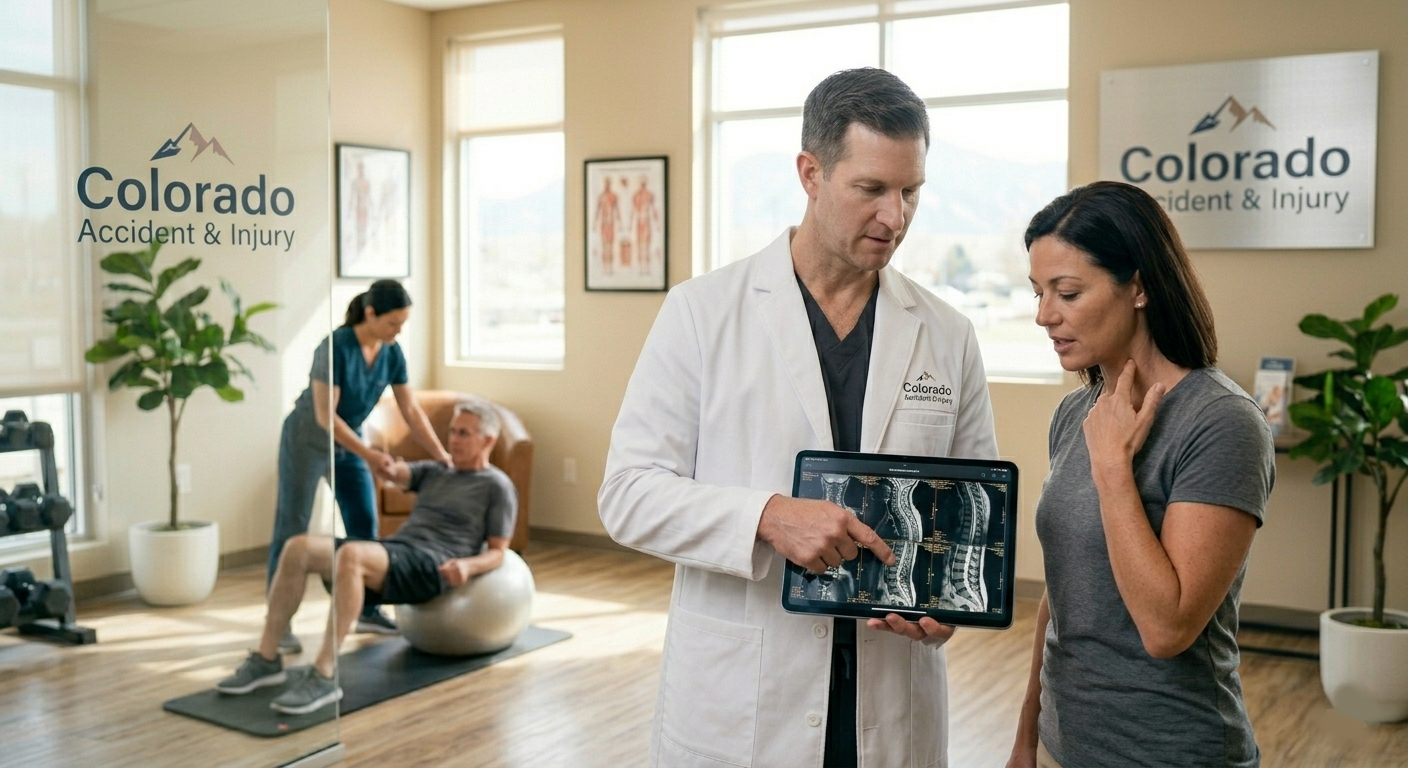
At Colorado Accident & Injury, our multi-disciplinary medical team helps patients navigate financial and legal challenges while providing advanced Medical Pain Management options. We specialize in identifying hidden, post-crash trauma. Recognizing why delayed symptoms occur allows you to protect your physical health and secure a timely, accurate diagnosis before minor injuries stabilize into permanent chronic pain.
The Physiological Power of Shock and Adrenaline
A biological state of shock can be a difficult concept to fully comprehend. If your physical injuries are bad enough, your body’s immediate survival response actively prevents you from feeling some or any of the pain. It can even temporarily slow down critical adverse events, such as localized bleeding. This occurs because your system instantly recognizes the severity of the trauma and alters its internal functions to brace and protect its core, which includes your vital internal organs and your brain.
Similarly, it can be hard to explain why you might feel completely fine immediately after a car accident, only to find several hours or days later that you have been badly hurt. You simply were unaware of the internal damage because your neurological pain receptors were temporarily bypassed. Because these hidden symptoms can indicate very serious underlying conditions, physical medicine doctors always recommend seeking a professional evaluation after a crash, even if you are not entirely sure you have been hurt.
Primary Delayed Symptoms to Watch For After an Impact
| Delayed Symptom | Underlying Pathological Mechanisms | Potential Medical Risks |
| Back and Neck Pain | Soft-tissue micro-tearing and whiplash trauma that takes days to trigger a profound inflammatory cascade. | Chronic structural instability, restricted range of motion, and localized muscle spasms. |
| Post-Crash Headaches | Intense psychological stress, sustained muscle tension, or direct kinetic forces traveling through the skull. | Can be an early warning sign of a hidden blood clot, a concussion, or a severe neck injury. |
| Numbness & Tingling | High-velocity jolts that push the spinal column out of alignment, directly compromising the nervous system. | Pinched nerve roots that may only fire or cause loss of sensation during specific physical movements. |
| Delayed Back Pain | Displaced vertebrae placing extra mechanical stress on back muscles, impacting local or systemic nerve pathways. | Accelerated disc degeneration, severe muscle guarding, and long-term mobility limitations. |
The Psychological Impact: Post-Traumatic Stress Disorder (PTSD)
A motor vehicle collision can be an extraordinarily traumatic event from a psychological perspective. During an impact, you are abruptly thrust into a terrifying, life-threatening position, or you may experience profound psychological shock from the financial damage to your vehicle or the physical suffering of yourself or others.
Post-traumatic stress can manifest as a mild, temporary disruption or as a devastating, chronic condition. Psychological trauma can linger for years or steadily grow worse over time as subsequent life stressors add to a list of unresolved traumas you have already endured. If you are experiencing flashbacks, severe driving anxiety, sleep disturbances, or emotional numbness, it is essential to seek professional help for PTSD from a medical professional, trained social worker, or licensed psychologist.
Protecting Your Personal Injury Claim with Forensic Documentation
Seeking immediate care at an integrated clinic is just as vital for your financial and legal protection as it is for your physical recovery. Personal injury lawyers and insurance adjusters evaluate post-crash medical timelines with extreme scrutiny.
If your medical records show a significant gap between the date of the accident and your first diagnostic exam, opposing insurance adjusters will frequently use your delayed symptoms against you. They will routinely argue that if you were genuinely injured, you would have sought care immediately, or they may claim your pain stems from an entirely separate event that occurred after the crash.
Our specialized medical team explicitly documents the biological mechanisms behind your delayed pain, logging your precise range-of-motion metrics, structural misalignments, and soft-tissue inflammation from your very first visit. This provides your legal counsel with the ironclad forensic evidence needed to push your insurance claims smoothly through complex administrative hurdles.
A Unified, Multi-Discipline Approach to Whole-Body Recovery
Successfully addressing delayed automotive trauma requires a synchronized approach to physical medicine. Our Colorado Springs healthcare facility brings a fourteen-member team of specialists together under one address to ensure your treatments operate in perfect harmony:
- Expert Chiropractic Care: Safely realigns the vertebrae, removing mechanical pressure from irritated nerve roots to resolve chronic headaches and structural stiffness.
- Best Physical Therapy Services: Incorporates active conditioning and targeted stretching to rebuild muscle groups that support your newly realigned joints, ensuring long-term stability.
Conclusion
Walking away from a car accident without immediate pain does not mean your musculoskeletal system escaped without damage. Do not wait for delayed whiplash, pinched nerves, or concussive headaches to become debilitating before taking action. If you are involved in a collision, always prioritize calling 911 or emergency services first to guarantee immediate scene safety. Once your scene safety is fully secured, make your very second call to Colorado Accident & Injury in Colorado Springs at 719-917-1000 to schedule a comprehensive evaluation with our fourteen-member expert team. Let our specialists unmask your hidden injuries and guide you safely back to an active lifestyle.
Unmask Hidden Injuries. Stop Delayed Pain Before It Starts.
Do not let a temporary absence of pain fool you into neglecting your health or your legal claim. Contact our unified multi-discipline clinic today for expert diagnostics and comprehensive post-crash rehabilitation.