
Did You Complete Your Physical Therapy? Essential Tips for Post-Treatment Home Care
Following a successful course of clinical treatment, transitioning back into your normal, everyday routine is an exciting milestone. However, many patients fall into the trap of assuming that once their formal, in-office clinical sessions are over, their recovery journey is completely finished.
If you recently completed a structured program for an auto injury or chronic condition, you must realize that even though your formal clinical sessions are complete, the work does not stop. To maintain your newly-regained mobility, prevent long-term regression, and protect your joints from future injury, you must consistently continue applying what you learned during your active physical therapy sessions.
At Colorado Accident & Injury, our multi-disciplinary medical team helps patients navigate financial and legal challenges while providing advanced Medical Pain Management options. Our physical medicine team understands that achieving long-term musculoskeletal health requires a seamless transition from clinical care to independent maintenance.
Integrating a few key healthy habits into your daily schedule will allow you to safeguard your clinical results and maintain a high quality of life:
1. Consistent Movement is a Absolute Must
Even if you spend a significant portion of your day at home or sitting at a desk, you must continue to move your body by engaging in regular, low-impact exercise. Consistent movement is absolutely critical for boosting systemic blood circulation and delivering oxygenated blood to recovering tissues. Keeping your body active as recommended by your physical medicine team is the only way to successfully finalize your long-term rehabilitation and prevent your muscles from tightening up.
2. Food and Hydration are Your Recovery Fuel
You cannot afford to neglect proper nutrition and structural hydration during your post-treatment phase. Food is the literal fuel that keeps your metabolic engine running. You must consistently eat a balanced diet rich in clean nutrients that provide the cellular building blocks required to repair and maintain damaged muscle fibers.
Simultaneously, adequate hydration is critical to allow those vital nutrients to successfully travel through your bloodstream and reach the specific areas of the body undergoing deep structural repair. If you are regularly working out or performing home exercises, your baseline daily water intake needs to be significantly higher to keep your joints properly lubricated.
3. Prioritize Rest for True Cellular Recovery
Securing adequate rest is just as important to a successful recovery as physical movement. The human body does not rebuild muscle fibers when you are actively moving; rather, our systems perform the vast majority of their structural repairs while we are asleep. Maintaining a highly regular daily routine and securing sufficient, deeply restful sleep each night is essential to lock in your physical gains.
4. Dedicate Time to Your Home Exercise Program (HEP)
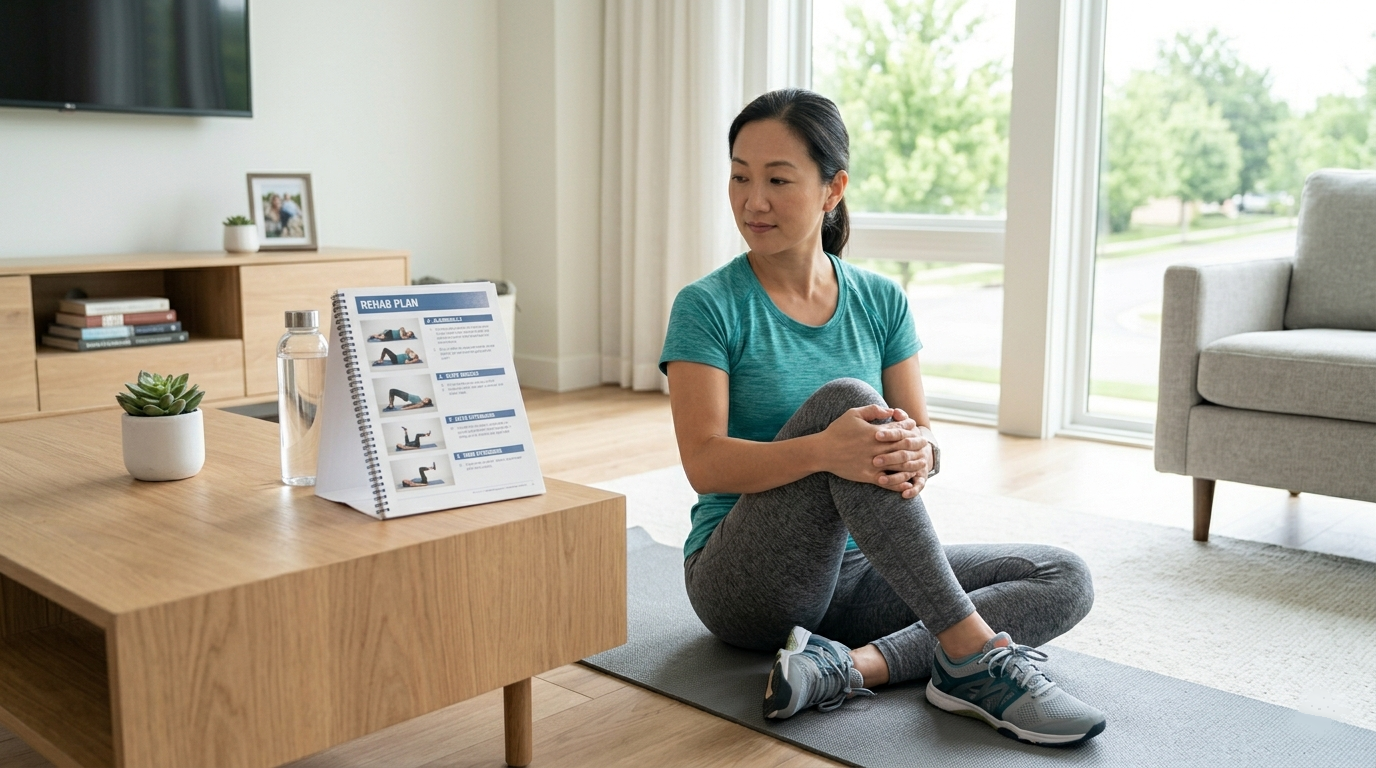
When you graduated from your formal clinical care, your specialized physical therapist should have provided you with a customized Home Exercise Program (HEP). This program is not optional—it is a mandatory continuation of your treatment. You must perform your prescribed stretching and strengthening routines exactly as instructed by your therapist to ensure your structural results stay with you for a lifetime.
The Multi-Disciplinary Framework for Sustained Mobility
Maintaining your physical health requires a holistic approach to medicine. While home exercises keep your muscles conditioned, structural misalignments can easily creep back in if your lifestyle forces you into poor postural habits. Our Colorado Springs facility integrates multiple specialties to keep your body operating at peak efficiency:
- Expert Chiropractic Care: While independent movement keeps your soft tissues flexible, high-impact trauma can leave structural vulnerabilities in your spine. Gentle manual chiropractic adjustments safely realign your vertebrae, removing mechanical pressure from irritated nerve roots to instantly eliminate chronic tension headaches and back stiffness.
- Integrated Medical Pain Management: If a sudden flare-up or underlying nerve pressure interferes with your home exercise program, specialized pain physicians can deploy advanced, targeted interventional treatments to manage discomfort safely without relying on addictive oral pharmaceuticals.
Why Post-Treatment Documentation Matters for Your Claim
For individuals recovering from a motor vehicle collision, continuing your home exercise program is also a vital administrative protection. Insurance adjusters and defense lawyers evaluate post-crash medical records with extreme scrutiny.
If a patient stops executing their home exercises and suffers a physical relapse months down the road, insurance companies will often claim the patient was negligent, using the regression as an excuse to downplay or deny a personal injury settlement. Our fourteen-member expert team carefully charts your exact functional baseline and home discharge instructions from day one, providing your legal counsel with the ironclad forensic evidence needed to push your insurance claims smoothly through complex administrative hurdles.
Conclusion
Completing your formal rehab sessions is a massive step forward, but consistency at home is what guarantees a lifetime of pain-free mobility. Do not let your hard-earned progress slide backward. If you are involved in a collision, always prioritize calling 911 or emergency services first to guarantee immediate scene safety. Once your immediate safety is established, call Colorado Accident & Injury at 719-917-1000 to schedule a comprehensive evaluation. Let our expert integrated team protect your physical longevity and support your health every step of the way.
Your Rehabilitation Doesn’t End at the Clinic Door. Protect your physical mobility and secure your clinical gains. Contact our unified multi-discipline clinic today for expert post-treatment guidance, advanced pain management, and ironclad medical documentation.