Physical and Occupational Therapy for Vehicular Accident Victims: A Dual Path to Recovery
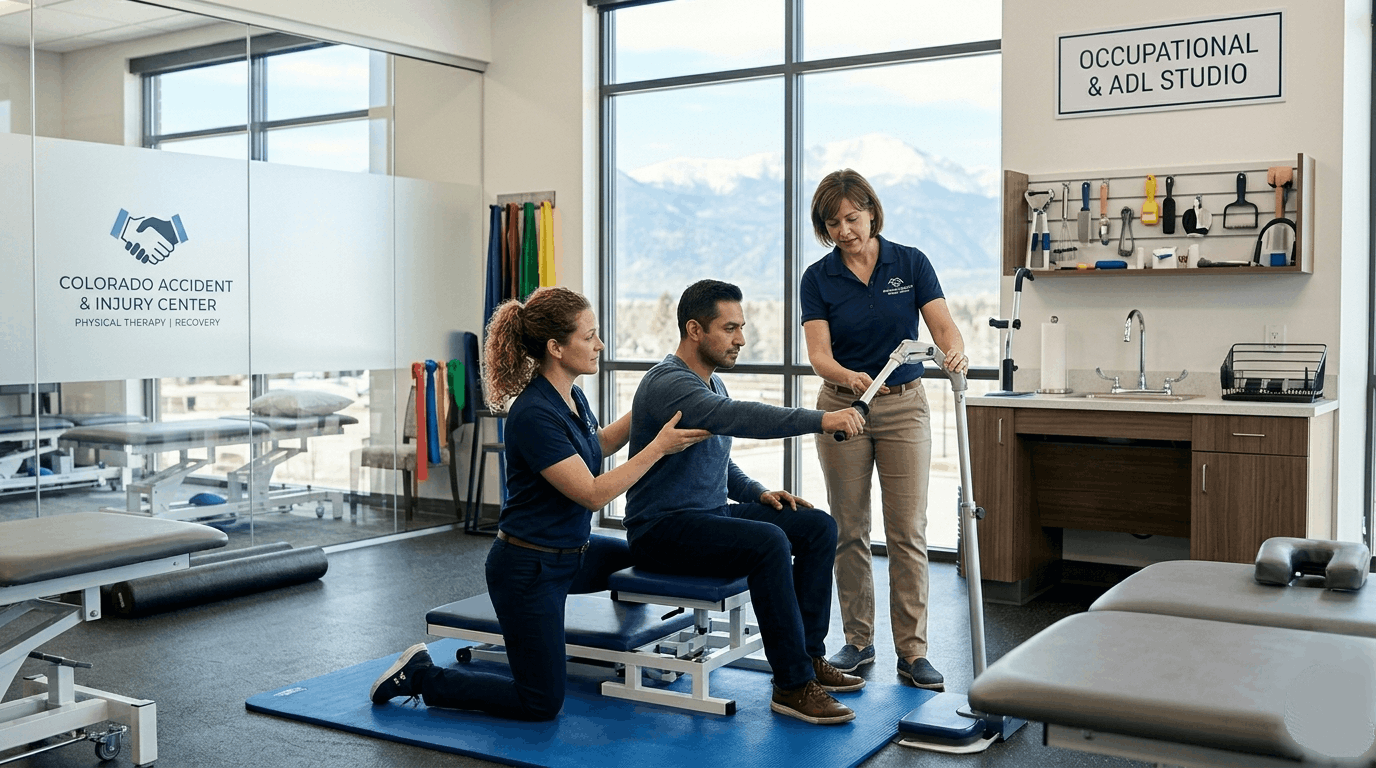
Physical therapy (PT) and occupational therapy (OT) are the cornerstones of modern rehabilitative care. While both assist people in returning to the regular activities they perform each day, they approach the healing process from different—yet complementary—angles. Understanding the synergy between physical and occupational therapy for vehicular accident victims is essential for anyone seeking to improve their quality of life after a traumatic injury or surgery.
At Colorado Accident & Injury, our integrated team helps patients navigate financial and legal challenges while providing the specialized hands-on care required to restore both physical strength and daily independence.
Defining the Differences: Focus vs. Adaptation
The primary difference between these two disciplines lies in their ultimate objective.
- Physical Therapy (PT): This is primarily focused on healing and strengthening the patient’s body. The goal is to return physical function to “normal” through biomechanical repair.
- Occupational Therapy (OT): This focuses on teaching patients how to adapt to their current challenges. OT is about becoming more efficient and independent in the performance of “activities of daily living” (ADLs).
Where the Disciplines Overlap
Despite their different focuses, both therapies share the goal of improving a patient’s overall functioning and quality of life. Both rely on set goals, regular progress assessments, and tailored treatment plans.
In a clinical setting, you may see these tasks overlap:
- An occupational therapist might teach a patient specific exercises or stretches to improve hand-eye coordination.
- A physical therapist may work on movements that assist with daily tasks, such as the mobility required to safely get in and out of a bathtub.
Physical Therapy: Healing the Mechanical Injury
For accident victims, a physical therapist (often called a physiotherapist) focuses on managing pain through physical intervention. Their role includes:
- Physical Evaluation: Assessing the injury to understand exactly how it restricts movement.
- Custom Treatment Plans: Utilizing a combination of targeted exercises, heat/ice therapy, and compression techniques.
- Hands-on Care: Providing Best Physical Therapy Services such as therapeutic massage and trigger point therapy to release tension.
- Fitness Restoration: Developing long-term programs to improve overall fitness and prevent future mishaps.
Occupational Therapy: Adapting the Environment
Occupational therapists work to ensure that an injury doesn’t stop you from living your life. Their work often moves beyond the clinic and into your personal environment:
- Environmental Assessment: Meeting with patients in their homes, offices, or schools to identify physical barriers.
- Assistive Technology: Recommending and teaching the use of devices that make daily activities—like dressing or cooking—easier and safer.
- Life Integration: Helping clients relearn how to perform their day-to-day routines with confidence.
Why Integrated Care Matters
When physical and occupational therapy for vehicular accident victims are combined, the recovery is more robust. While PT builds the strength to walk, OT ensures you can navigate your kitchen safely while doing so. At Colorado Accident & Injury, we integrate these therapies with Chiropractic Care and Medical Pain Management to ensure every aspect of your recovery is addressed.
Final Thoughts: Reclaim Your Daily Life
If you have been injured in a collision, don’t just focus on the pain—focus on your function. By utilizing both physical and occupational therapy, you can heal your body and adapt your world for a faster return to normalcy.
Two Therapies, One Unified Goal: Your Independence From hands-on strengthening to home adaptations, our Colorado Springs team has you covered.