How to Treat Intervertebral Disc Herniation: A Guide for Car Accident Victims
The vertebrae of the human spine are protected by round-shaped discs featuring a tough outer layer (the annulus) that act as “shock absorbers” for the delicate spinal cord. These discs are designed to take most of the impact to protect your central nervous system, but a significant road accident can overwhelm these structures.
At Colorado Accident & Injury, our integrated team helps patients navigate financial and legal challenges by providing specialized diagnostics and tiered treatment plans for victims suffering from spinal trauma.
Understanding Intervertebral Disc Herniation
Intervertebral disc herniation, commonly known as a “herniated disc,” occurs when a fragment of the disc nucleus protrudes through a tear in the annulus and into the spinal canal. Because the spinal canal only has enough space to house the spinal cord and its 31 pairs of nerves, there is no room for displaced fragments.
When this fragment presses against a spinal nerve, it produces pain that varies from a dull ache to an electric shock. While age-related degeneration is a common factor, a single high-impact event—like an automobile collision—is a prevalent cause of acute herniation in younger patients.
Recognizing the Symptoms by Location
Symptoms vary significantly depending on whether the injury is located in the lower back (lumbar spine) or the neck (cervical spine).
1. Lumbar Spine (Lower Back)
This is the most common site for herniation. Victims often experience:
- Sciatica: Pain, tingling, or burning that radiates from the buttock down into one leg.
- Positional Pain: Discomfort that intensifies specifically when sitting, walking, or standing.
- Numbness: A loss of sensation in the foot or lower leg.
2. Cervical Spine (Neck)
When a disc in the neck is affected, the symptoms shift to the upper body:
- Radiating Arm Pain: Discomfort between the shoulder blades that extends down to the hands.
- Movement Sensitivity: Increased pain when turning the neck or moving the shoulder.
- Shoulder Numbness: A tingling or loss of feeling in the deltoid or upper arm area.
How to Treat Intervertebral Disc Herniation
The clinical path to recovery begins with a detailed examination. Our doctors evaluate your reflexes, muscle strength, walking ability, and sensitivity to light touches or vibrations to determine the severity of the nerve compression.
Step 1: Conservative Treatments
For the majority of accident victims, the first goal is to modify activities to limit painful movements. This allows the body’s natural inflammatory response to subside.
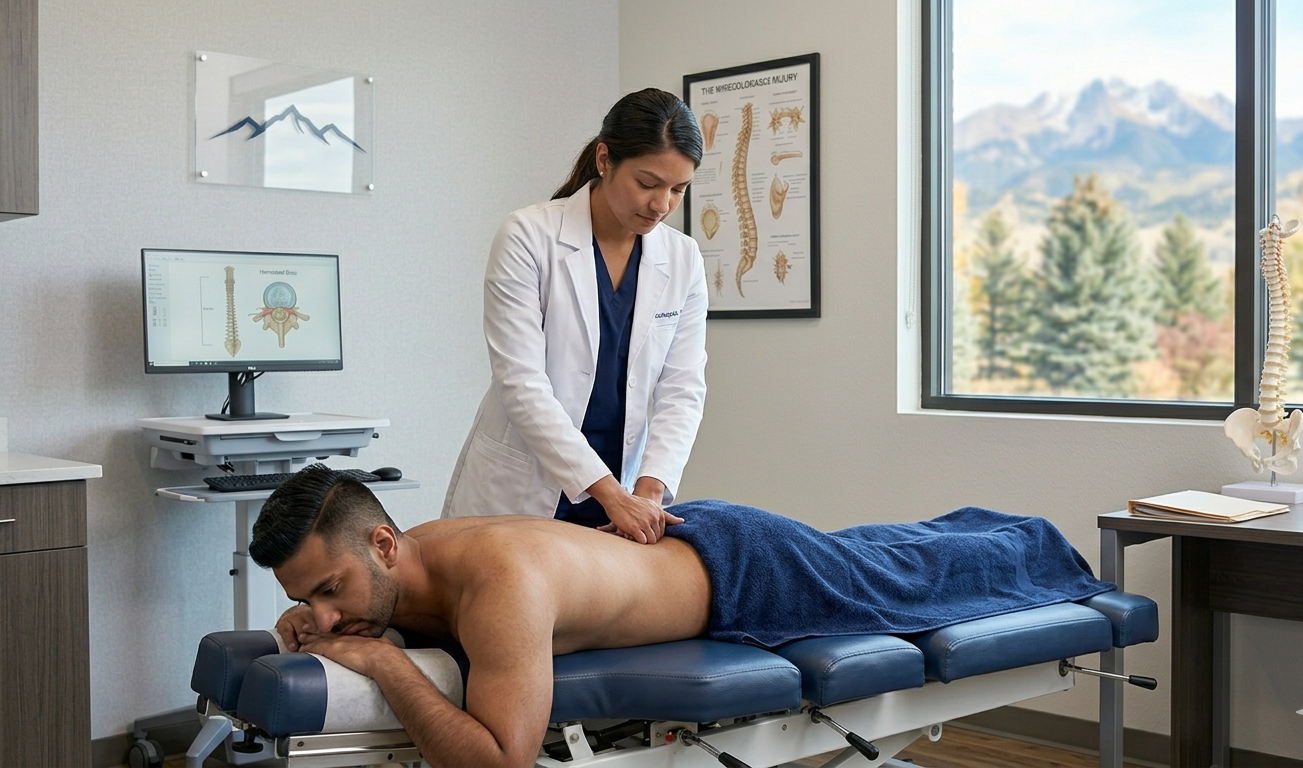
- Chiropractic Care: To decompress the affected area and ensure spinal alignment.
- Therapeutic Exercise: Best Physical Therapy Services are utilized to strengthen the muscles surrounding the spine, providing a natural internal brace to prevent further protrusion.
Step 2: Medication Management
To facilitate rehabilitation, various medications may be recommended to alleviate acute pain:
- Neuropathic Drugs: Specifically for nerve-related pain.
- Muscle Relaxers: To stop the debilitating spasms associated with spinal guarding.
- Cortisone Injections: To deliver powerful anti-inflammatory relief directly to the site of the herniation.
Step 3: Surgical Intervention
Surgery is reserved as a last resort when conservative methods fail to yield positive outcomes after a significant period of time. During these procedures, the protruding portion of the disc is removed to relieve nerve pressure. In severe cases, the entire disc may be replaced or the vertebrae fused to stabilize the spine.
Start Your Recovery in Colorado
At Colorado Accident & Injury, we prioritize conservative treatments to help patients recover fully without the need for invasive surgery. Our team of experts is dedicated to creating a personalized recovery plan that restores your mobility and relieves your pain.
Don’t Let Spinal Pain Define Your Life If you are struggling with a suspected herniated disc after a collision, knowing how to treat intervertebral disc herniation is the first step toward wellness. Contact Colorado Accident & Injury today for an expert evaluation and start your journey back to a pain-free life.