
Travel Tips for Thanksgiving: Staying Safe on the Road During the Holiday Rush
Travel tips for Thanksgiving are essential for anyone planning to join the millions of Americans hitting the road for the holiday feast. Thanksgiving is traditionally one of the busiest—and most dangerous—travel periods of the year. With congested highways, unpredictable Colorado weather, and drivers who may be rushed or distracted, the risk of a collision increases significantly. At Colorado Accident & Injury, our priority is your family’s safety. While we are always here to help you recover after a crash, we would much rather help you prevent one entirely.
Whether you’re crossing the Continental Divide to reach family or staying local in the Front Range, these expert insights will help you minimize risks and ensure a smooth, stress-free holiday journey.
1. The Strategic Advantage: Plan Your Route
Before you even turn the key, you need a strategy. In the digital age, travel tips for Thanksgiving must include leveraging real-time technology. Colorado’s topography means that a clear sky in Denver can mean a blizzard in Vail.
- Use Live Traffic Apps: Tools like Waze or Google Maps can save you hours by rerouting you around holiday bottlenecks or accidents.
- Check CDOT Resources: The Colorado Department of Transportation (cotrip.org) provides live camera feeds and chain-law updates that are vital for mountain travel.
2. Vehicle Readiness: Your First Line of Defense
A breakdown on a cold November night isn’t just an inconvenience; it’s a safety hazard. Ensure your “steel cocoon” is ready for the journey.
- The Tire Check: In Colorado, “Traction Law” is often in effect. Ensure you have either 4WD/AWD or tires with a winter rating (M+S or the mountain-snowflake icon) and at least 3/16″ tread depth.
- Battery and Fluids: Cold snaps drain older batteries quickly. Ensure your antifreeze is rated for sub-zero temperatures and your windshield wiper fluid is the “de-icer” variety.
3. Mastering the Art of Defensive Driving
During the holiday rush, you aren’t just driving your car; you’re anticipating the mistakes of everyone else on the road.
- The Three-Second Rule: On dry roads, stay three seconds behind the car in front of you. In snowy or icy conditions, increase this to six or nine seconds.
- Signal Early: Communication is key when highways are packed. Give other drivers plenty of notice before changing lanes or exiting.
4. Combatting “The Silent Killer”: Driver Fatigue
Fatigue is a leading cause of accidents during travel tips for Thanksgiving discussions, yet it’s often ignored. Drowsy driving can be as dangerous as driving under the influence.
- Schedule Stops: Stop every two hours. Step out of the car and use some basic movements from our Best Physical Therapy Services repertoire—gentle neck rolls and hamstring stretches—to keep blood flowing and maintain alertness.
- The Power of the Co-Pilot: If you have another licensed driver in the car, switch roles frequently to keep both minds fresh.
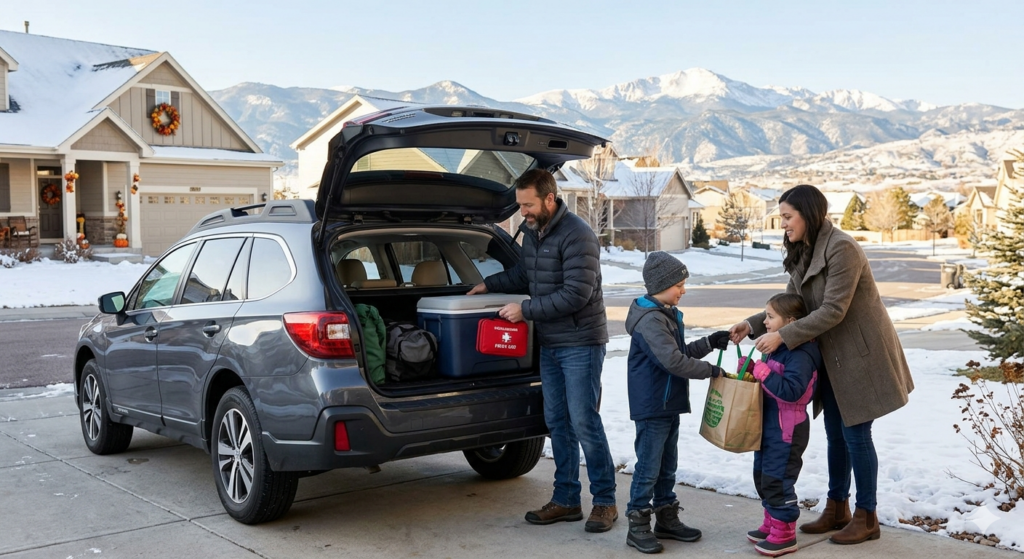
5. Packing a “Colorado-Ready” Emergency Kit
If you get stuck on I-25 or I-70, you need to be self-sufficient for a few hours. Your kit should include:
- Thermal Protection: Blankets, extra gloves, and hats.
- Safety Gear: Jumper cables, a flashlight with fresh batteries, and road flares.
- Sustenance: High-calorie snacks and plenty of water.
- Tech: A portable power bank to ensure your phone stays charged if your car battery dies.
6. Elimination of Distractions
Thanksgiving is about connection, but save the deep conversations or phone calls for the dinner table. Distracted driving is a primary cause of rear-end collisions. If you need to check the GPS or change the music, let your passenger handle it, or pull over safely at a rest stop.
7. Managing the “Post-Drive” Physical Toll
Even if you avoid an accident, long-distance travel is incredibly hard on the body. Sitting in a cramped position for hours leads to spinal compression and hip tightness.
- Post-Travel Care: Consider a session of Chiropractic Care or Massage Therapy once you return home to reset your alignment and release the tension built up during the drive. This prevents “travel stiffness” from turning into a long-term back issue.
8. What to Do if an Accident Occurs
Sometimes, despite your best efforts, the unthinkable happens. Because our clinic helps patients navigate financial and legal challenges, we recommend a quick checklist:
- Safety First: Move to the shoulder if possible and turn on hazards.
- Call 911: Even for minor accidents, a police report is vital for your insurance claim.
- Document: Take photos of all vehicles and exchange insurance information.
- Listen to Your Body: Don’t ignore “minor” neck stiffness. As we’ve discussed in our blogs on whiplash, symptoms can take days to peak.
9. Navigating the Legal and Medical Aftermath
If you are injured, remember that Colorado has specific statutes of limitations and insurance requirements. Seeking care within the first 72 hours is the best way to protect your health and your potential legal claim. We work closely with experts to ensure your medical records are meticulous and ready for any legal scrutiny.
Drive Safely and Enjoy the Journey Your holiday memories should be about family and food, not accidents and injury. If the road does take an unexpected turn, our team is ready to support your recovery.