
Navigate Auto Insurance and Personal Injury Claims: A Survivor’s Guide to Recovery and Rights
To navigate auto insurance and personal injury claims successfully, you must realize that your medical recovery and your legal case are two sides of the same coin. Recovering from an auto accident is an inherently taxing process. Between managing physical pain, attending frequent medical appointments, and dealing with the emotional weight of a crash, the last thing most people want to handle is a stack of insurance paperwork. However, the decisions you make in the first few weeks of your recovery will directly impact your ability to receive fair compensation.
At Colorado Accident & Injury, we believe that you shouldn’t have to choose between focusing on your health and fighting for your rights. In this guide, we provide the expert roadmap you need to protect your future while you focus on getting back to your best self.
1. The Medical Record: Your Most Important Legal Document
Your health is the priority, but in the eyes of an insurance company, if an injury isn’t documented, it doesn’t exist. Seeking immediate medical attention is the first and most vital step to navigate auto insurance and personal injury claims. Many common injuries, such as whiplash or concussions, carry a “latent” onset—meaning you feel fine at the scene, but wake up in agony two days later.
By visiting our specialists immediately, you create a dated, professional record that links your symptoms directly to the accident. Whether you require Chiropractic Care or neurological screening, this baseline documentation prevents insurance adjusters from claiming your injuries were pre-existing.
2. The Power of “Total Documentation”
The more data you provide, the less room an insurance company has to negotiate down your claim. To strengthen your position, keep a dedicated “Recovery Folder” that includes:
- The Symptom Log: Track daily pain levels and how they limit your ability to play with your kids or perform at work.
- The Paper Trail: Every receipt for a prescription, every mileage log for trips to our clinic, and every discharge summary.
- The Scene Evidence: Photos of the vehicles and the location, which help establish the “mechanism of injury”—showing exactly how the force of the crash affected your body.
3. Decoding Your Insurance Policy (PIP, MedPay, and More)
Insurance policies are written in dense, legal language that can be hard to decipher. In Colorado, understanding your specific coverage is essential:
- MedPay: This is a vital resource that covers medical bills regardless of fault. It ensures you can receive treatment without waiting for a lawsuit to settle.
- Liability: This is the at-fault driver’s insurance. Their goal is to pay you as little as possible.
- UM/UIM: If the person who hit you was uninsured, your own “Uninsured Motorist” coverage becomes your primary source of recovery.
4. Why Professional Legal Advocacy Matters
Personal injury claims are complex. While you are focusing on Best Physical Therapy Services to regain your mobility, an insurance adjuster is looking for reasons to close your file cheaply. An experienced attorney acts as your shield.
At Colorado Accident & Injury, we frequently collaborate with the region’s top legal experts. We ensure our clinical notes provide the “burden of proof” they need to fight for your lost wages and pain and suffering.
5. The Danger of the “Quick Settlement”
Insurance companies often reach out within days of an accident with a “final” offer. While a quick check may seem tempting when medical bills are mounting, it is almost always a trap. Once you sign a release, you waive your right to ask for more money later—even if you discover a herniated disc or chronic nerve pain months down the road. Patience is a virtue in the claims process. Ensure your Pain Management team has fully assessed your long-term prognosis before you sign anything.
6. Compliance: The “Good Patient” Advantage
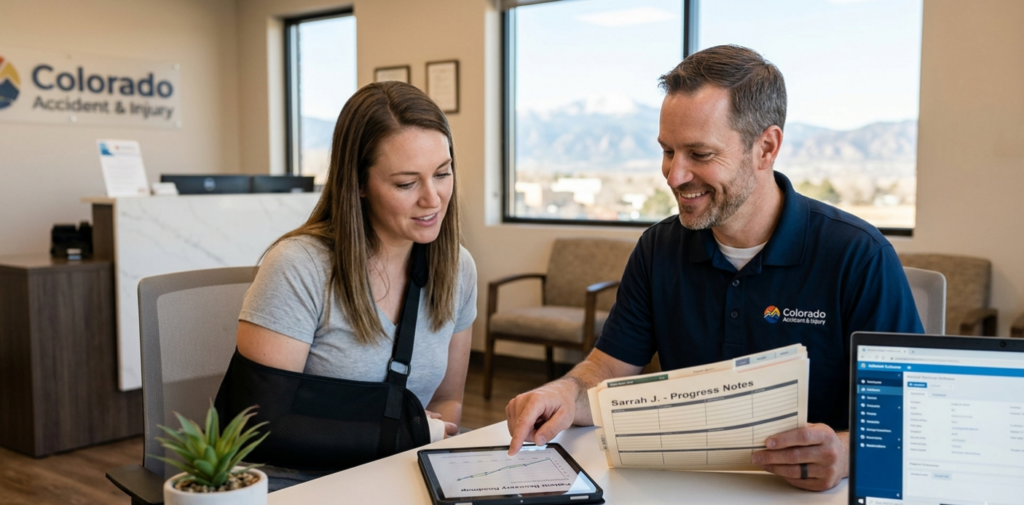
The insurance company is watching your “compliance.” If you skip physical therapy sessions or fail to follow your doctor’s orders, they will argue that you aren’t actually injured. By staying dedicated to your treatment plan, you aren’t just healing your body—you are proving the medical necessity of your claim. We make this easy by providing an integrated, “all-in-one” environment where all your specialists are on the same page.
7. Social Media: The Silent Claim-Killer
In the digital age, your Instagram or Facebook posts can be used against you. If you claim to have severe back pain but post a photo at a family BBQ or a hiking trail, an insurance defense lawyer will use that to undermine your credibility. To successfully navigate auto insurance and personal injury claims, it is best to stay “offline” regarding your recovery.
8. Staying Organized for the Long Haul
A claim can take months to resolve. Staying organized is the only way to prevent stress from boiling over. Because our clinic helps patients navigate financial and legal challenges, we help keep your records organized and ready for your attorney at a moment’s notice. We act as the bridge between the exam room and the courtroom.
Take Control of Your Physical and Financial Future You don’t have to handle the aftermath of an accident alone. Our team provides the clinical excellence and the documentation you need to win.