Knowing Post-Traumatic Stress Disorder: Beyond the Invisible Scars
Post-Traumatic Stress Disorder (PTSD) is a profound psychological response to severe or repeated trauma. While often associated with combat veterans, PTSD is a very common reality for survivors of severe motor vehicle accidents who struggle to find their emotional and cognitive balance. Knowing Post-Traumatic Stress Disorder is the first step in understanding that your reactions aren’t “weakness”—they are a biological suspension of reality designed to help you survive an intensely frightening experience.
At Colorado Accident & Injury, our multidisciplinary team helps patients navigate financial and legal challenges so that the focus remains entirely on the delicate process of reclaiming your peace of mind.
The Mechanism of Dissociation
During a crash, the brain may enter a state of dissociation. This is a temporary suspension of reality where time seems to slow down, or you feel as though you are watching yourself from a distance. While common during minor upsets, frequent dissociation due to repeated violence can lead to more persistent conditions, such as dissociative identity disorder.
Recognizing the Three Faces of PTSD
Knowing Post-Traumatic Stress Disorder requires recognizing that it manifests in three distinct ways: emotionally, behaviorally, and physiologically.
1. Psychological and Emotional Symptoms
The internal battle of PTSD often involves a chaotic mix of:
- Intrusive Thoughts: Confusing memories or “flashes” of the accident that disrupt daily life.
- Emotional Volatility: Intense anger, deep depression, and ongoing paranoia or fear.
- Survivor’s Guilt: A heavy sense of shame or responsibility, regardless of actual fault.
2. Behavioral Manifestations
Trauma changes how we interact with the world. Behavioral red flags include:
- Isolation and Withdrawal: Avoiding people, places, or the specific road where the accident occurred.
- Self-Sabotage: Damaging personal relationships due to a sudden lack of trust.
- Substance Use: Turning to alcohol or drugs to “numb” the emotional pain.
3. Physiological Reactions
The body often “remembers” the trauma even when the mind tries to forget. These physical markers include:
- Chronic Tension: Frequent headaches and tremors.
- Sleep Disturbances: Nightmares and the tendency to replay the trauma repeatedly while awake.
- Autonomic Distress: Sudden bouts of nausea or a racing heart when triggered.
Simple vs. Complex PTSD
From a medical perspective, practitioners categorize the disorder into two types:
- Simple PTSD: Arising from a one-time traumatic event, such as a single car accident. This type generally has a higher expectation for a full or partial recovery.
- Complex PTSD: Resulting from repeated, prolonged exposure to trauma, such as war or ongoing personal violence.
The Path to Recovery: Integrated Treatment
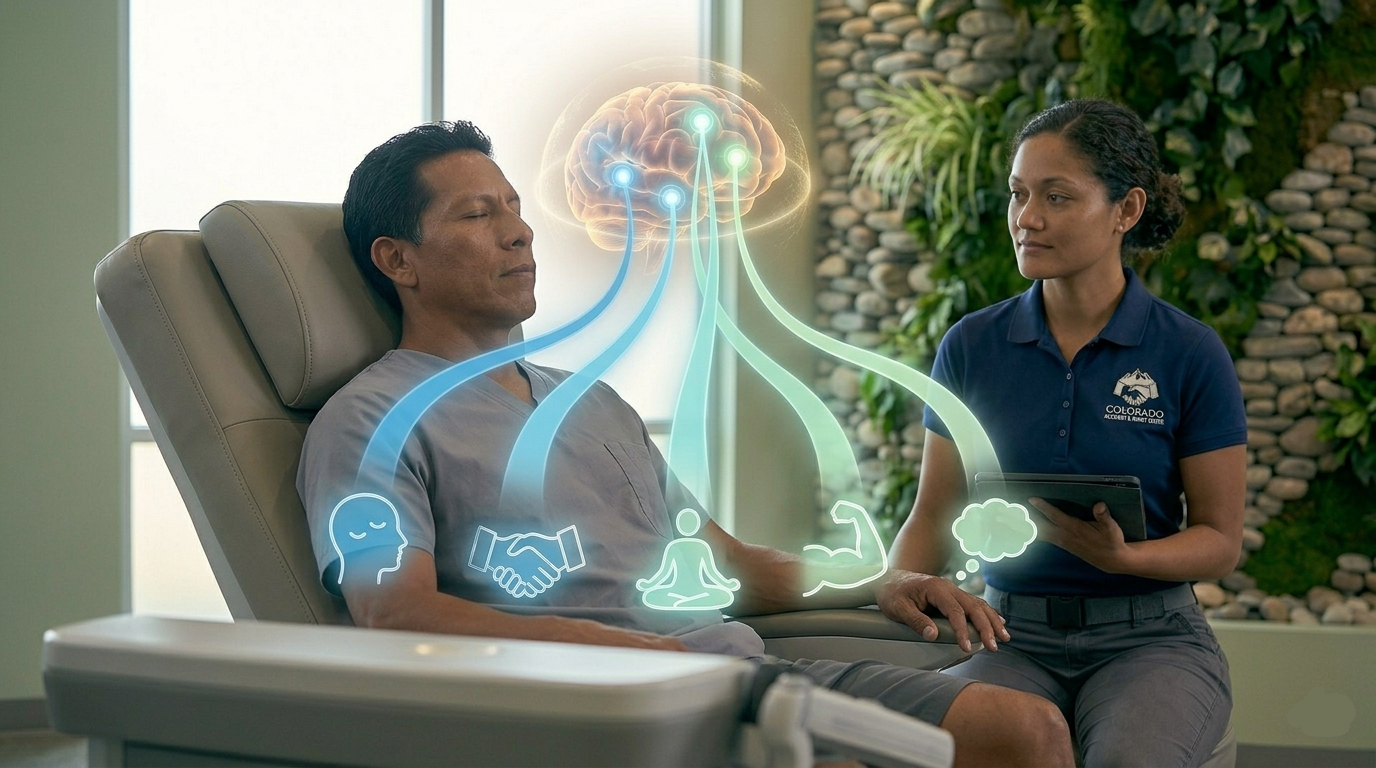
Recovery is not a linear path, but Knowing Post-Traumatic Stress Disorder means knowing there are many ways to heal. Successful treatment often overlaps several modalities:
- Psychotherapy: Talk therapy is critical. Whether it is cognitive, behavioral, or group therapy, the most important factor is “buy-in”—the patient and therapist must both believe in the technique for it to be effective.
- Pharmacological Support: Medication can help stabilize the chemical imbalances caused by trauma.
- Alternative Relaxation: Methods such as massage, acupuncture, and meditation are extremely helpful in relearning how to relax.
- Creative Expression: Music and art therapy can help patients regain focus and composure.
Diagnosis and Professional Help in Colorado Springs
The critical starting point for recovery is a proper diagnosis. The professional medical staff at Colorado Accident & Injury has extensive experience recognizing the early signs of PTSD following an accident. By integrating Medical Pain Management with specialized referrals, we ensure that your physical and mental recovery move forward together.
Final Thoughts: Healing is Possible
Knowing Post-Traumatic Stress Disorder is about acknowledging the injury so you can begin the treatment. If you are replaying your accident or feeling disconnected from your life, reach out. You don’t have to carry the weight of the “invisible” injury alone.
Reclaim Your Story Our Colorado Springs specialists are here to guide you from trauma back to tranquility.